
How do we live together? Lessons from a ‘Learning About Dementia – Experience’
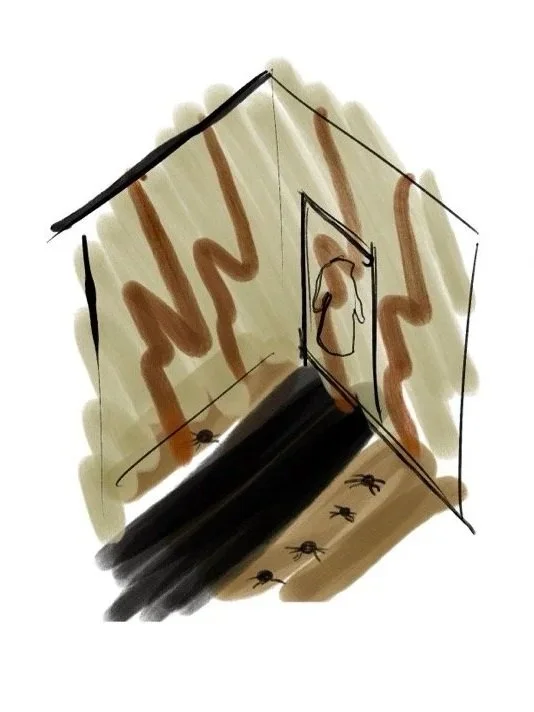
When the stripes turns into snakes, the floor is nothing but a hole, the carpet is nothing but cockroaches
Lessons from Galvin Engineering x Dementia Australia
Whenever I talk about my paternal grandmother, vivid memories of our family dinner would appear. The smell of the oil evaporating from the wok, lingers lazily through the kitchen to the dining room while fine bone China bowels would clatter on the round table, expanded for at least 20 people to be squeezed into seats. Fish bones chewed thoroughly and hastily used as a toothpick before being discarded on the newspapers, while the evening news beeps its opening theme. Grandma would sit there, waiting and eating, all the while her sons (including my father) would take turns going into her bedroom for their routinely call. One uncle would pick up the phone and pass it to grandma, and her anxious demeaner would soften at the voice on the other end.
Somehow, one of her four sons has become her husband who has left us many years ago, informing her of his routine and telling her that it will be a while before he could join her and their children for dinner.
Dementia has always been a very confusing diagnosis to me. My first interaction with the cognitive condition was seeing the anxious state of my grandma, continually forgetting my name while berating me for being left-handed. The anxiety that had a grasp on my grandma’s mind would result in a rise in voice – until the hum of the nightly news or local dramas would draw her into a calm lull, peeling oranges that she routinely purchased every morning and eating each wedge thoughtfully as if nothing had happened.
Grandma was the only person I knew who had dementia then, and my impression of it was frozen by that scene. I always assumed that their tempers would change and their memories are at a constant loop from a certain timeline. Turns out there are deeper layers to dementia – and these layers are often hastily swept under the rug and often misunderstood.
Recently, my office was invited to a Galvin x Dementia Australia collaboration event that involves designers to experience the varying symptoms of dementia. As Australia is known for its aging population, dementia is now listed as the main cause of death in the country. “Dementia describes a collection of symptoms caused by disorders affecting the brain. Dementia is not a normal part of getting older, and it isn’t one specific disease. Instead, it’s a broad term that covers the effects on people of a number of different medical conditions.” (Dementia Australia, 2026).
Throughout the experience, our presenter and host of the event stressed on the complexities of dementia; how everyone’s encounter with the cognitive degenerative condition would result in varying symptoms. We watched an interview of an elderly woman who is experiencing sensory changes due to dementia. These experiences include a constant smell of bad food that lingers, shower water that feels like sharp needles, and floors with dark colours that projects an impression of a black hole. These perceived illusions can cause confusing and fear for patients, which may lead to anxious response where those around them would think that they ‘are having a moment’. To be made aware of these changes has made me reflect on what my grandma must have experienced, and what my aunt (who is now showing signs of the condition) is currently experiencing.
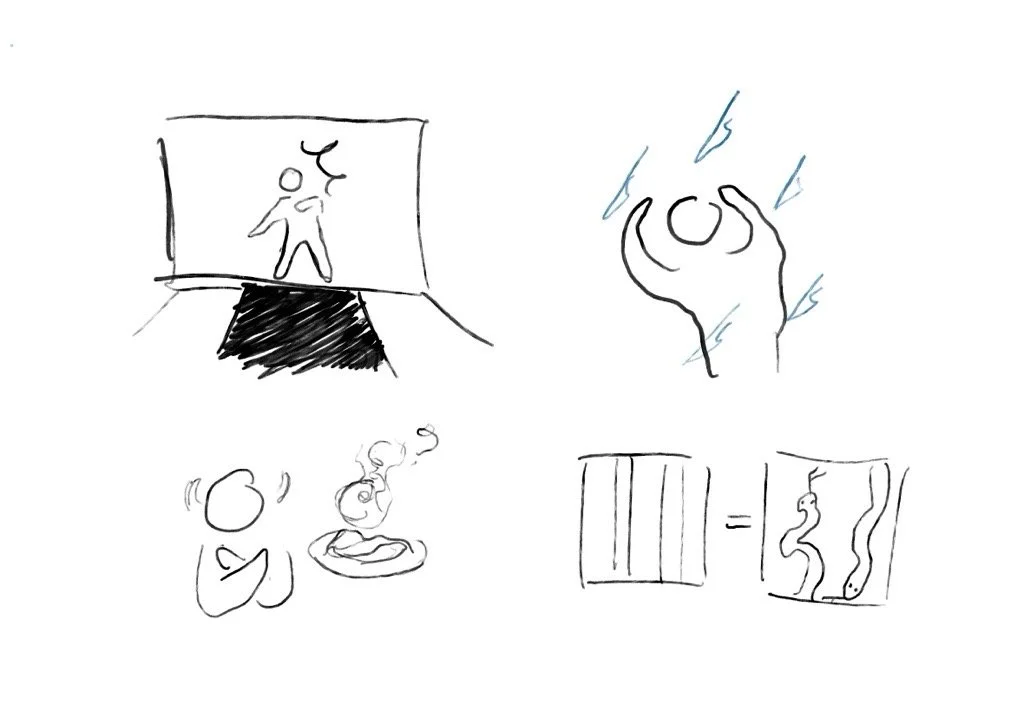
Some patients live with a change in senses
Through the virtual experience, we were able to grasp some of the lived experiences those who have dementia. Wearing the headgear, we were walking through the eyes of Eddie, who was up in the middle of the night and on a mission to go to the bathroom. Walls covered in stripes suddenly started warping, the dotted carpet transformed into cockroaches scrambling across the floor, the door was difficult to find, and it was easy to trip across dark bulky furniture. The hallway, marked with a dark carpet created the black-hole effect, and I felt his unease as he pressed himself up against the wall to avoid the carpet. There was a sense of relief when I thought he reached the toilet, yet the victory was short-lived when the wife turns on the light to reveal that we mistook the laundry basket for the toilet.
Undoubtedly, what we saw does not mean that every patient living with dementia would be going through everything we witnessed. However, it gave me a lot of understanding as a designer, especially why luminance contrast, and clearance has been ingrained deeply in our DDA (Disability Discrimination Act) Standards – AS1428.1. The luminance contrast, though being one of my many cautious points resonated with me, especially when we were taken to a second scenario of better design. Rooms made of colour blocking that identified where doors were located, closet with clear labels of what was housed inside, doorknobs and light switches coated in red – there was a sense of ease and calm from Eddie this time. Even his wife in the background was more compassionate and kinder to his evening mission. Small changes yielding big results, a testament to what good design can do to one’s lifestyle and wellbeing.
This experience has definitely called for compassion and perhaps to slow down and digest what dementia could mean for affected individuals. I think about how Hong Kong (my hometown) is taking steps to have more compassion for those who are experiencing it, starting by renaming dementia to one that is not degrading to the elderly. In a society where aesthetics is so heavily laid at the forefront of being ‘media-worthy’, I question whether we could start to consider aesthetic as inclusive and accessible. I sometimes still think about the faux bus stop outside a nursing home – a small kind gesture that reduces the panic of elderly patient who are lost. In a time where we are facing an aging population, it is prudent for us to consider how home interiors, public spaces should be considered, especially when we’re expected to ‘construct a nursing facility every three days’ (Mark Butler, 2026). Design is not a luxury but a necessity. Good design is considered, and it is not something we look at for the next five years, but really the next twenty to fifty years.
Related works: Architecture for the Homesick 101: We need to talk about your grandparents (2019)
Resources (Kindly shared by Dementia Australia)
3. The National Aged Care Design Principles and Guidelines
4. The Dignity Manifesto of Design for People Living with Dementia (University of Tasmania; The Design Dignity Dementia Team: Richard Fleming, John Zeisel, Kirsty Bennett, Jan Golembiewski, Kate Swaffer, and Lynda Henderson)
5. The Dementia Enabling Environment Project (DEEP)
6. Antonovsky: Salutogenic Approaches to Dementia Care (Chapter 48)
7. Enablingenvironments.com.au
8. Dementia Training Australia (DTA)
9. Dementia Friendly Home App (Dementia Australia)
10. Dementia Services Development Centre (DSDC UK)