
©2016 archemistinthemaking
The Heartbroken Architect II : Signs Part II (2016-2017)
| Prologue I | Prologue II | Signs I | Signs II |
Following from the set of Prologues, the project continued quietly elsewhere.
I picked it up again during my Writing for Architecture elective in my first year of Masters. We had the option of writing whatever we wanted so long as it was architecture related.
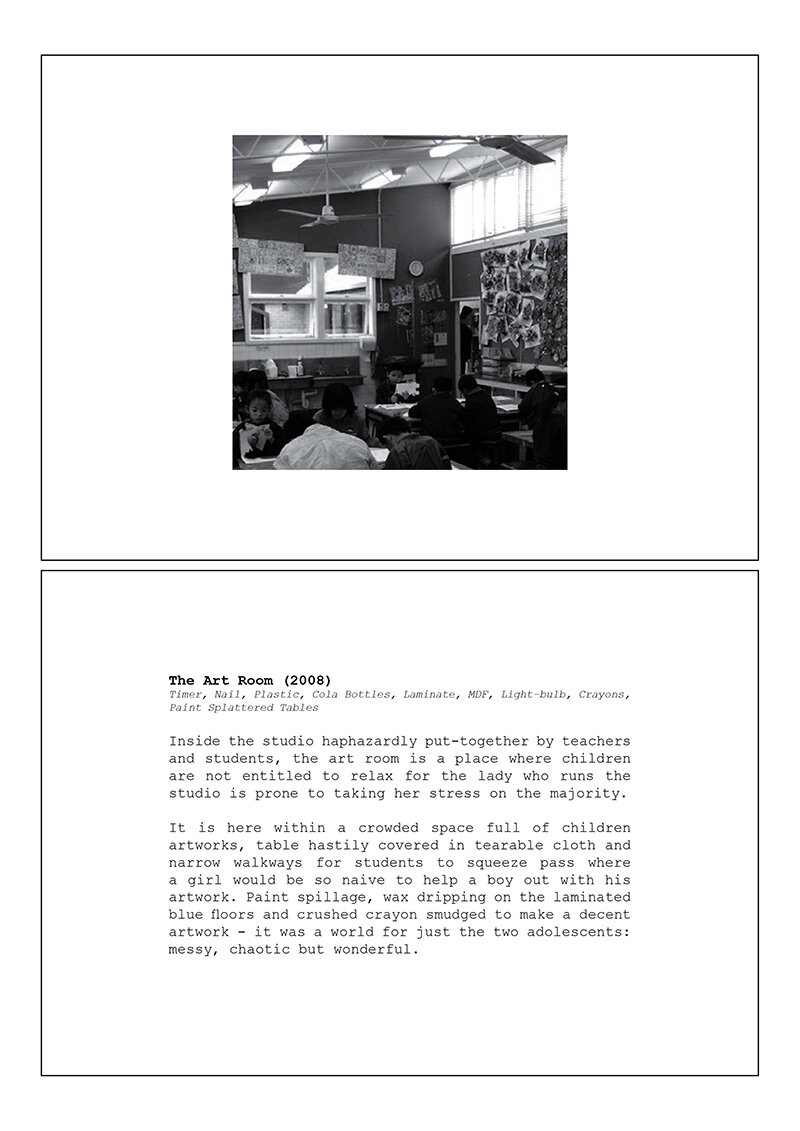
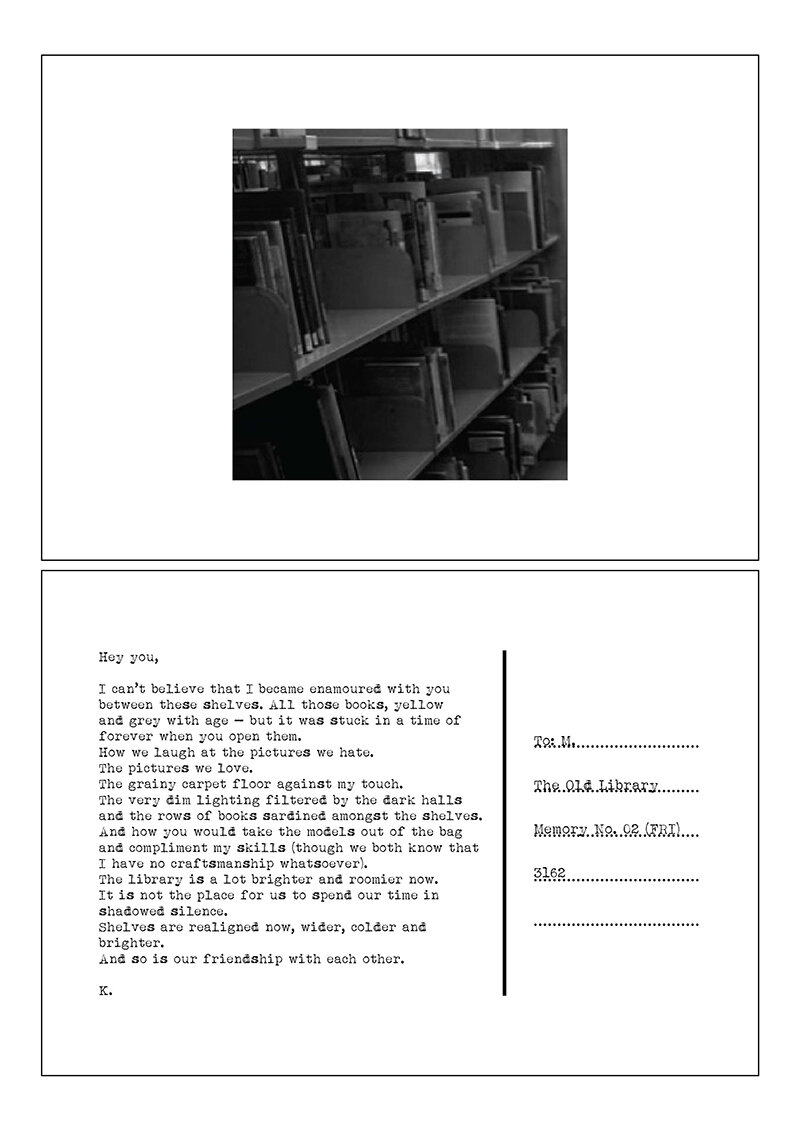
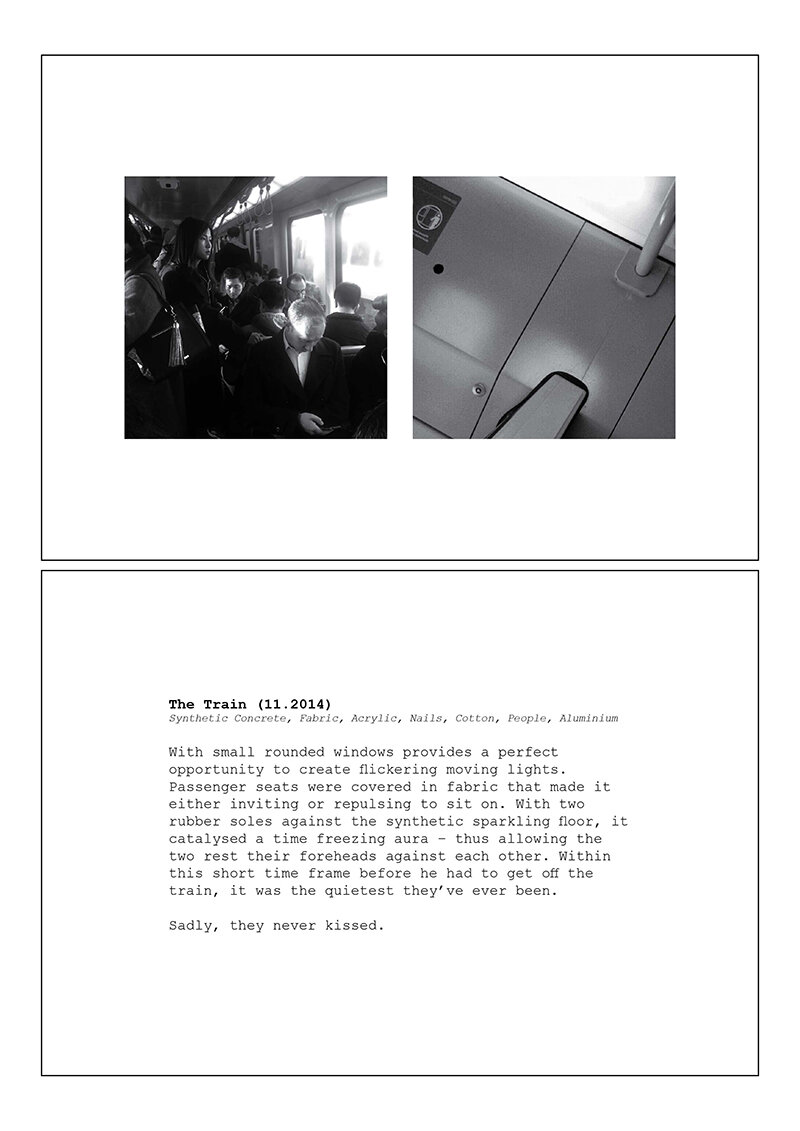
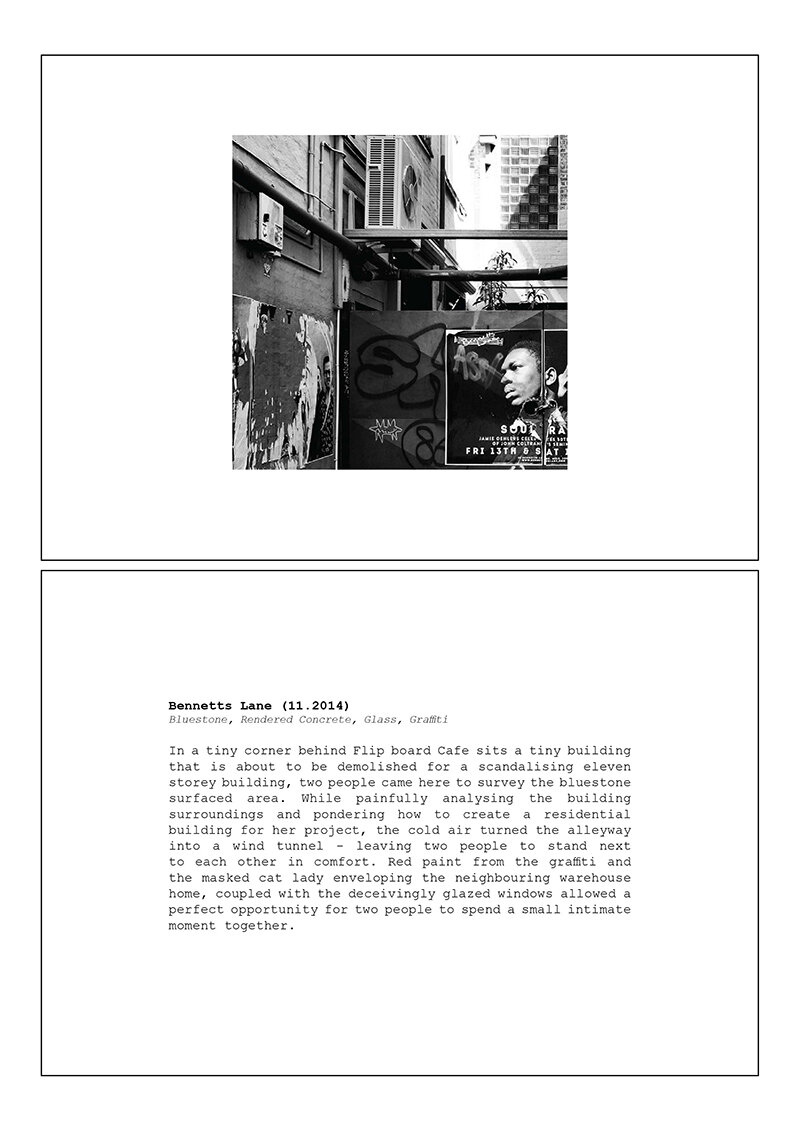
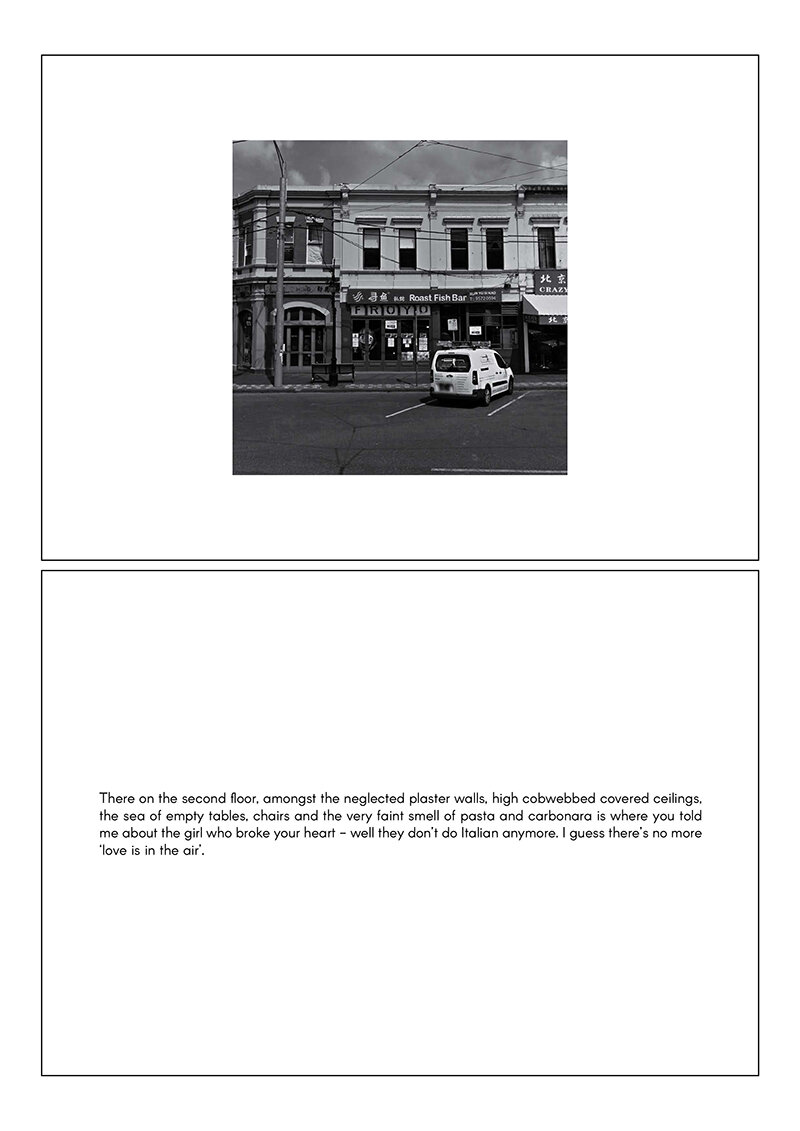
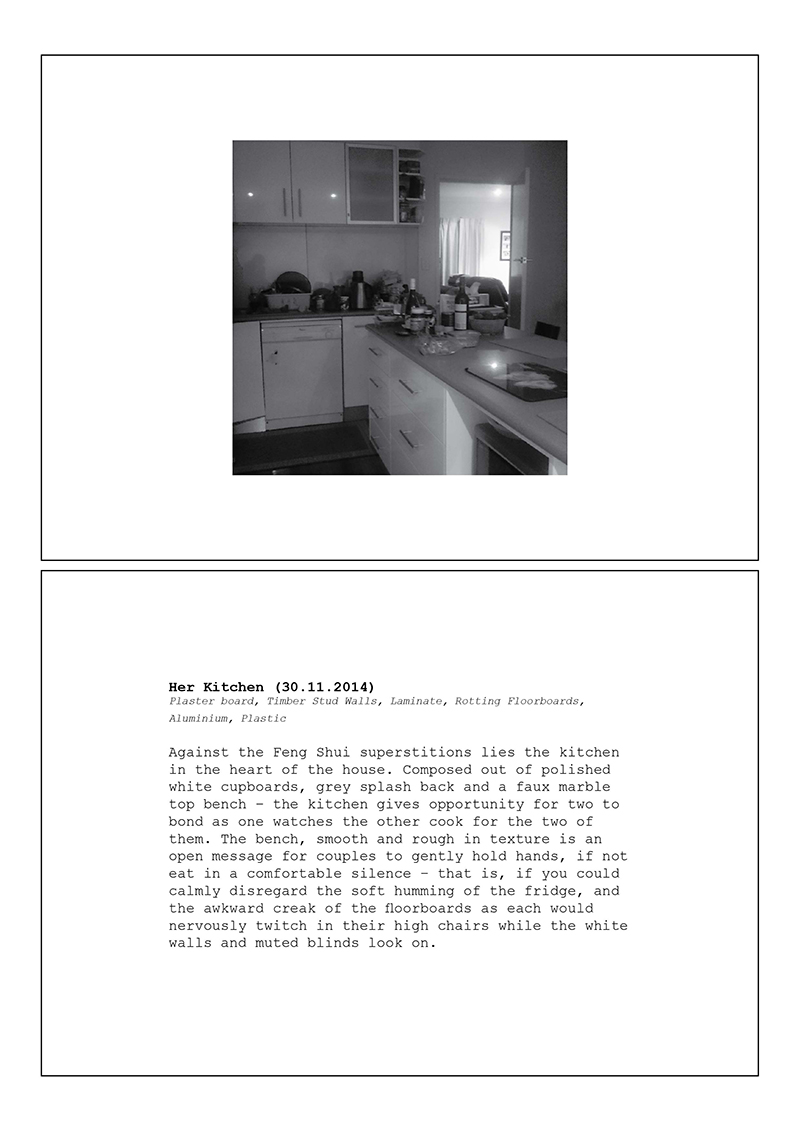
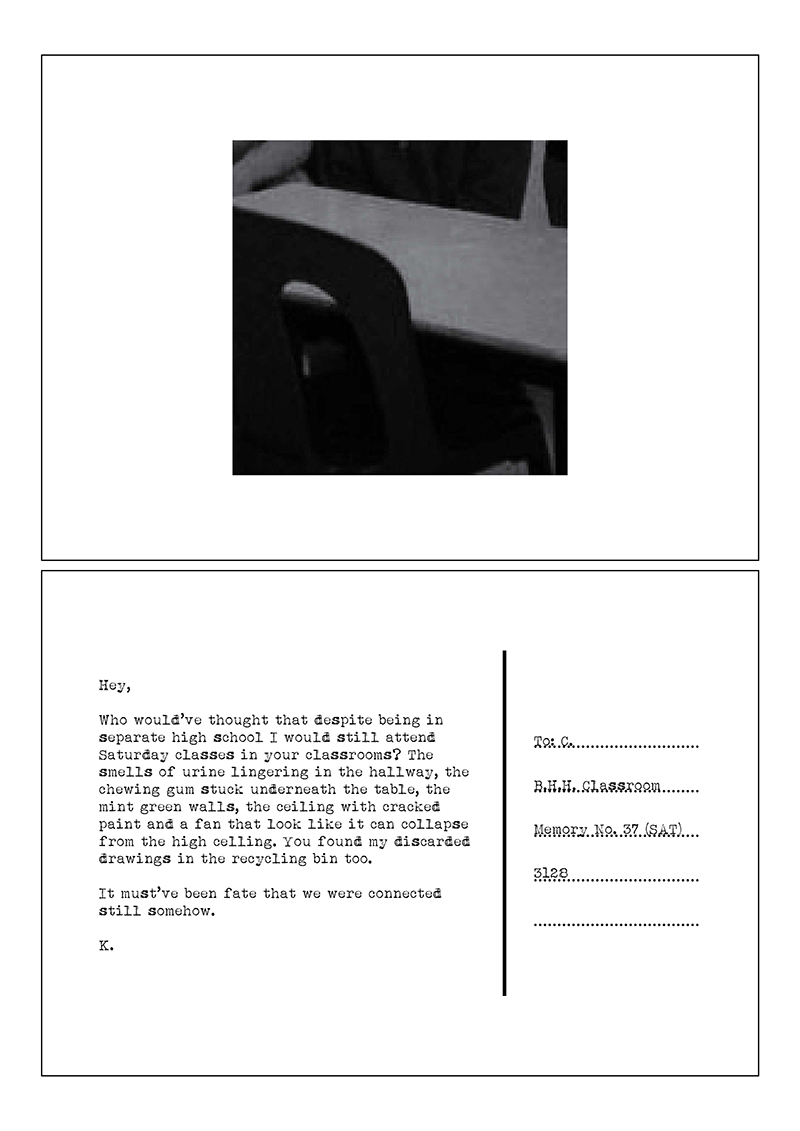
The second series 'Signs’ - a set of postcards was inspired by the Museum of Broken Relationships. This museum was founded in Croatia and displayed relics of past relationships. ‘Signs’ took similar principles, only this time, I’ve looked at photos of places that reminded me of my past relationships of my former love interests. The postcards followed the same metaphor in Prologue - no memory is aligned, only constantly re-shuffled.
There are several sentences that never made it to the final assignment. But I will post them later once this set has been fully published.
Also in this series:
| Prologue I | Prologue II | Signs I | Signs II |
The Heartbroken Architect II : Signs Part I (2016-2017)
| Prologue I | Prologue II | Signs I | Signs II |
Following from the set of Prologues, the project continued quietly elsewhere.
I picked it up again during my Writing for Architecture elective in my first year of Masters. We had the option of writing whatever we wanted so long as it was architecture related.
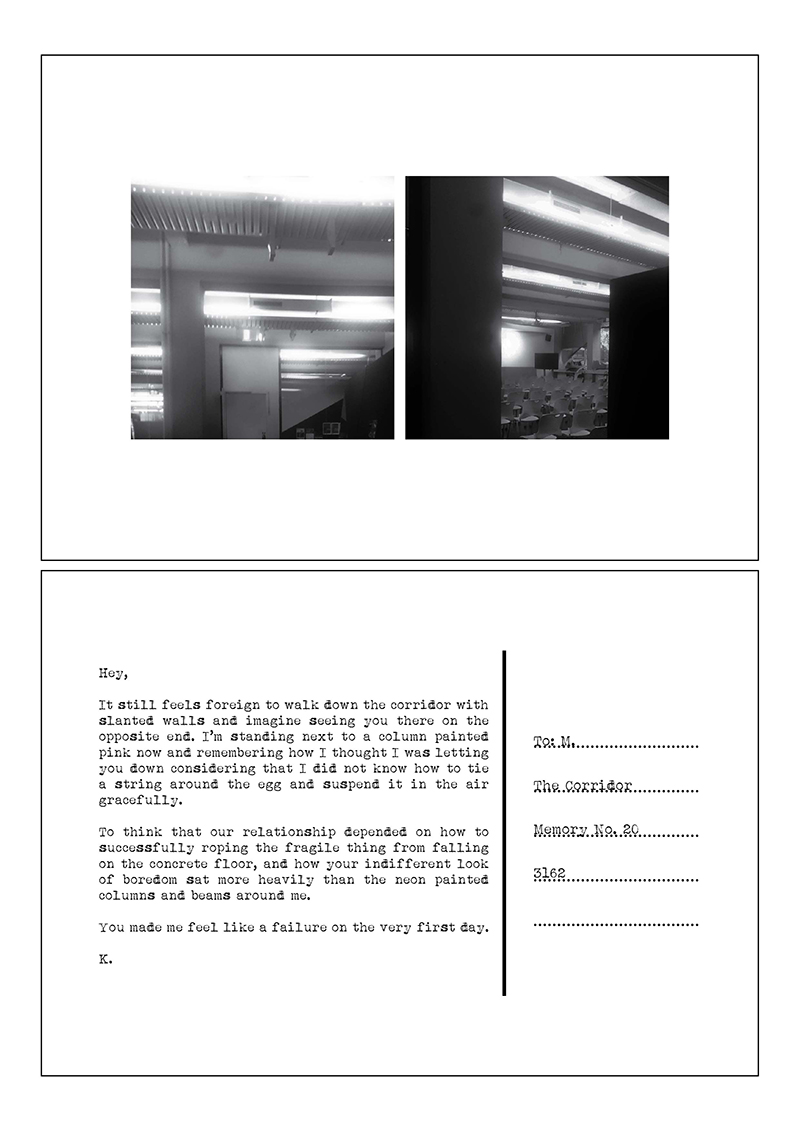
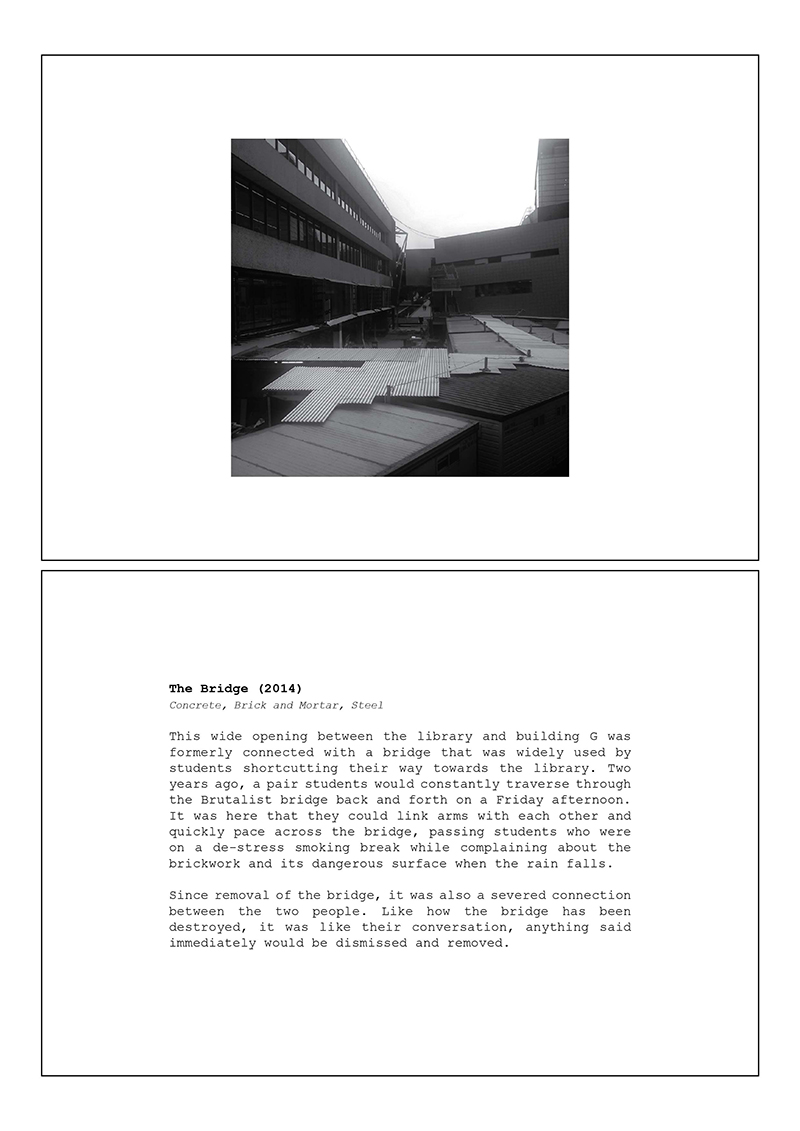
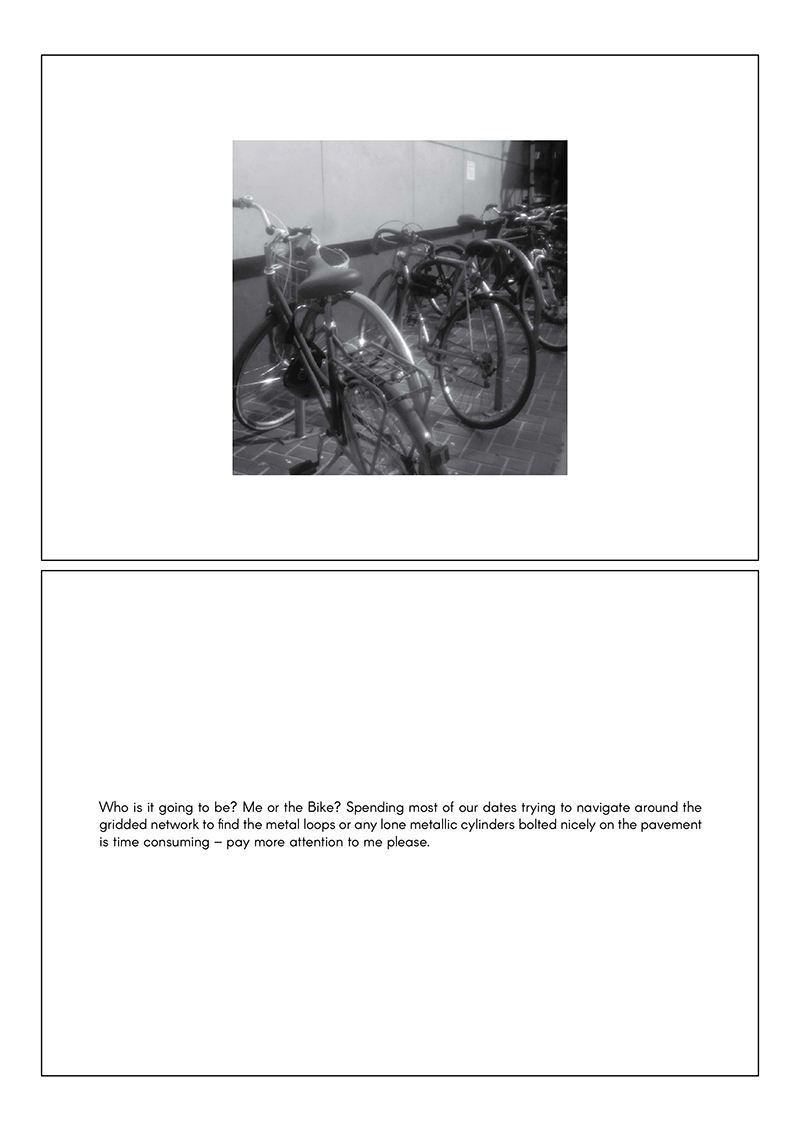
The second series 'Signs’ - a set of postcards was inspired by the Museum of Broken Relationships. This museum was founded in Croatia and displayed relics of past relationships. ‘Signs’ took similar principles, only this time, I’ve looked at photos of places that reminded me of my past relationships of my former love interests. The postcards followed the same metaphor in Prologue - no memory is aligned, only constantly re-shuffled.
There are several sentences that never made it to the final assignment. But I will post them later once this set has been fully published.
Also in this series:
| Prologue I | Prologue II | Signs I | Signs II |
The Heartbroken Architect I.V : Prologue II (2016-2017)
| Prologue I | Prologue II | Signs I | Signs II |
This project began in the third year of architecture when we had to create three items to demonstrate a selected concept. Focusing on Ray and Charles Eames’s ‘Power of 10’, I focused on the expression of ‘infinity’ and the disparity of a person’s memory.
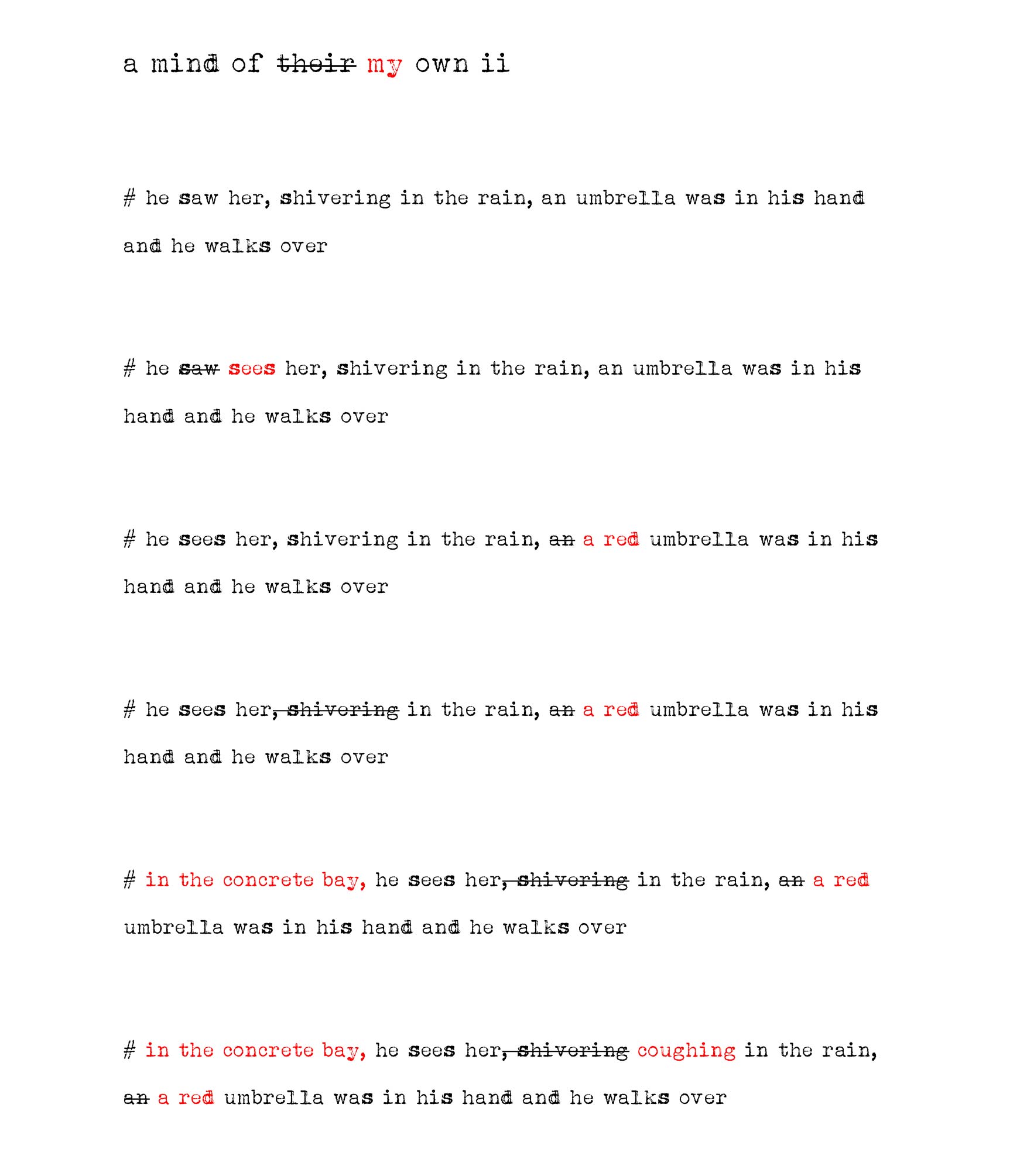
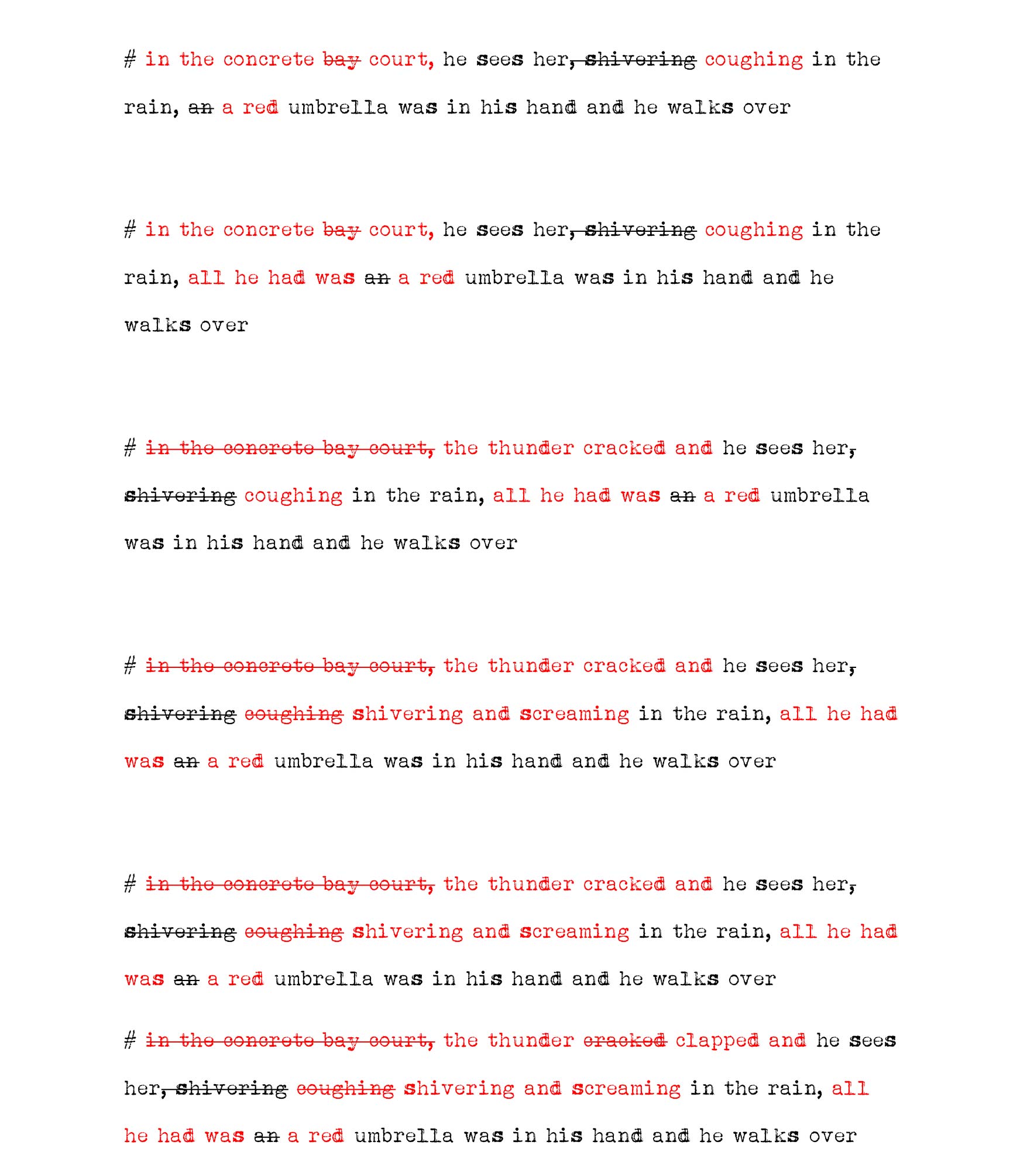
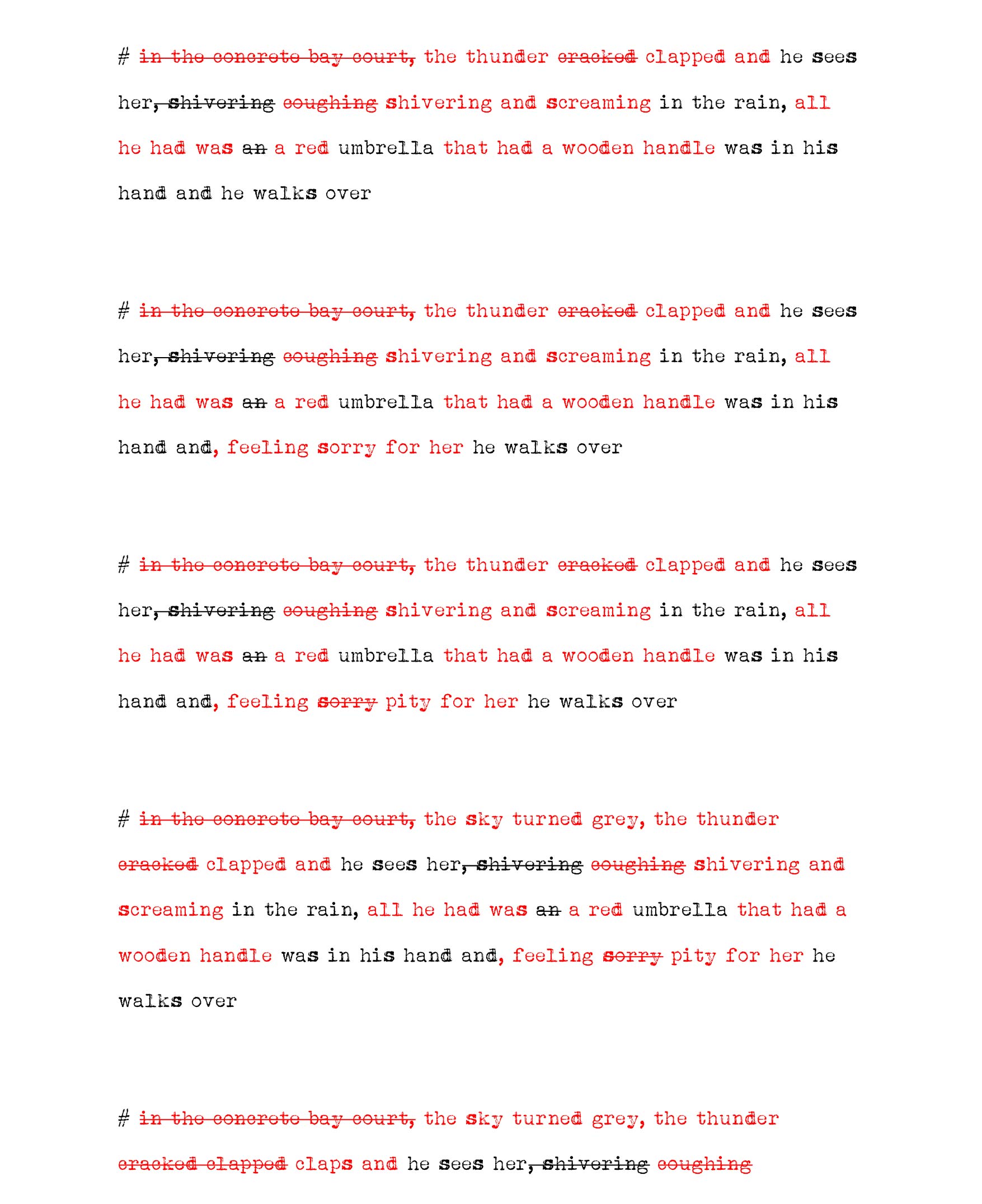
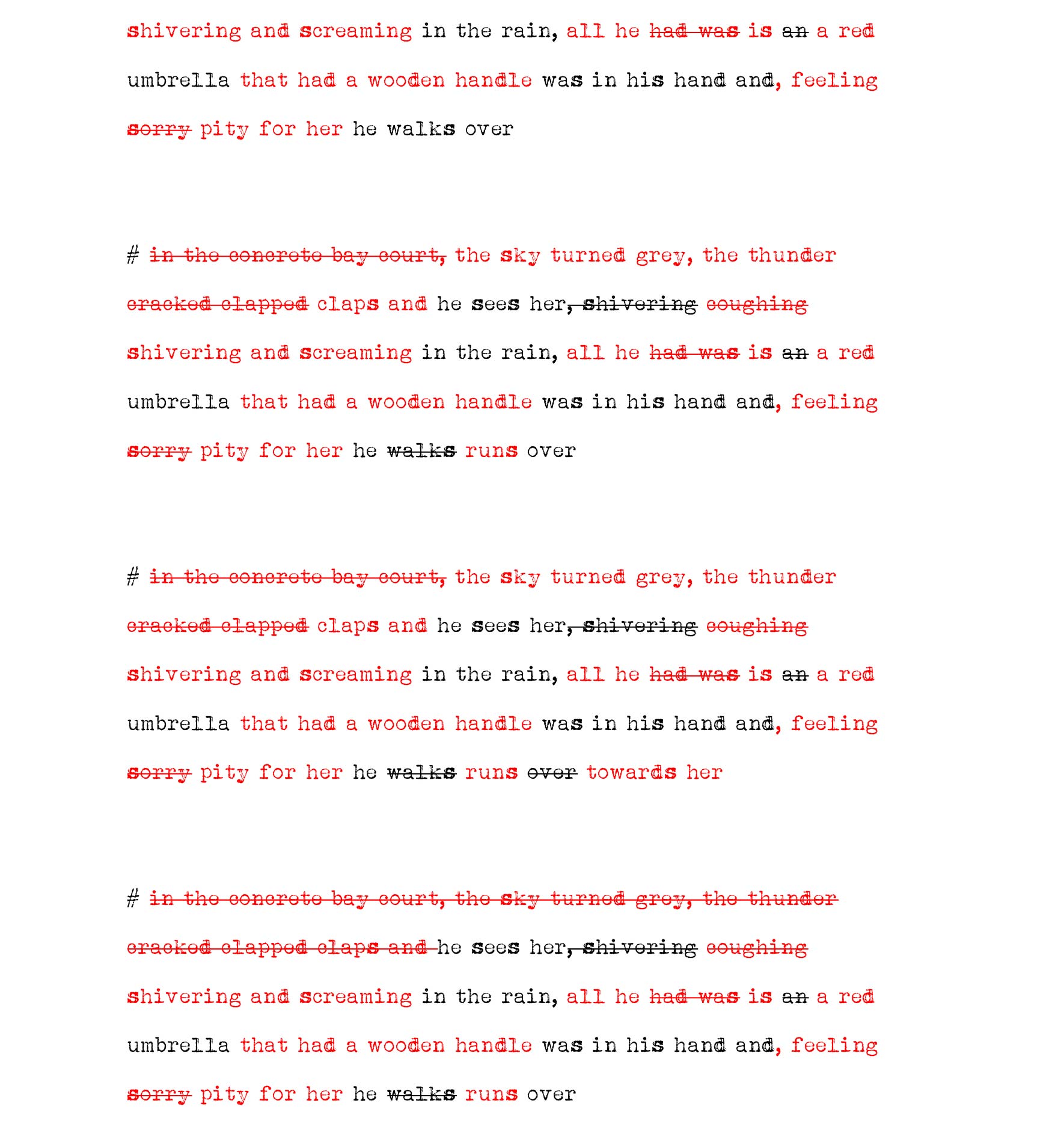
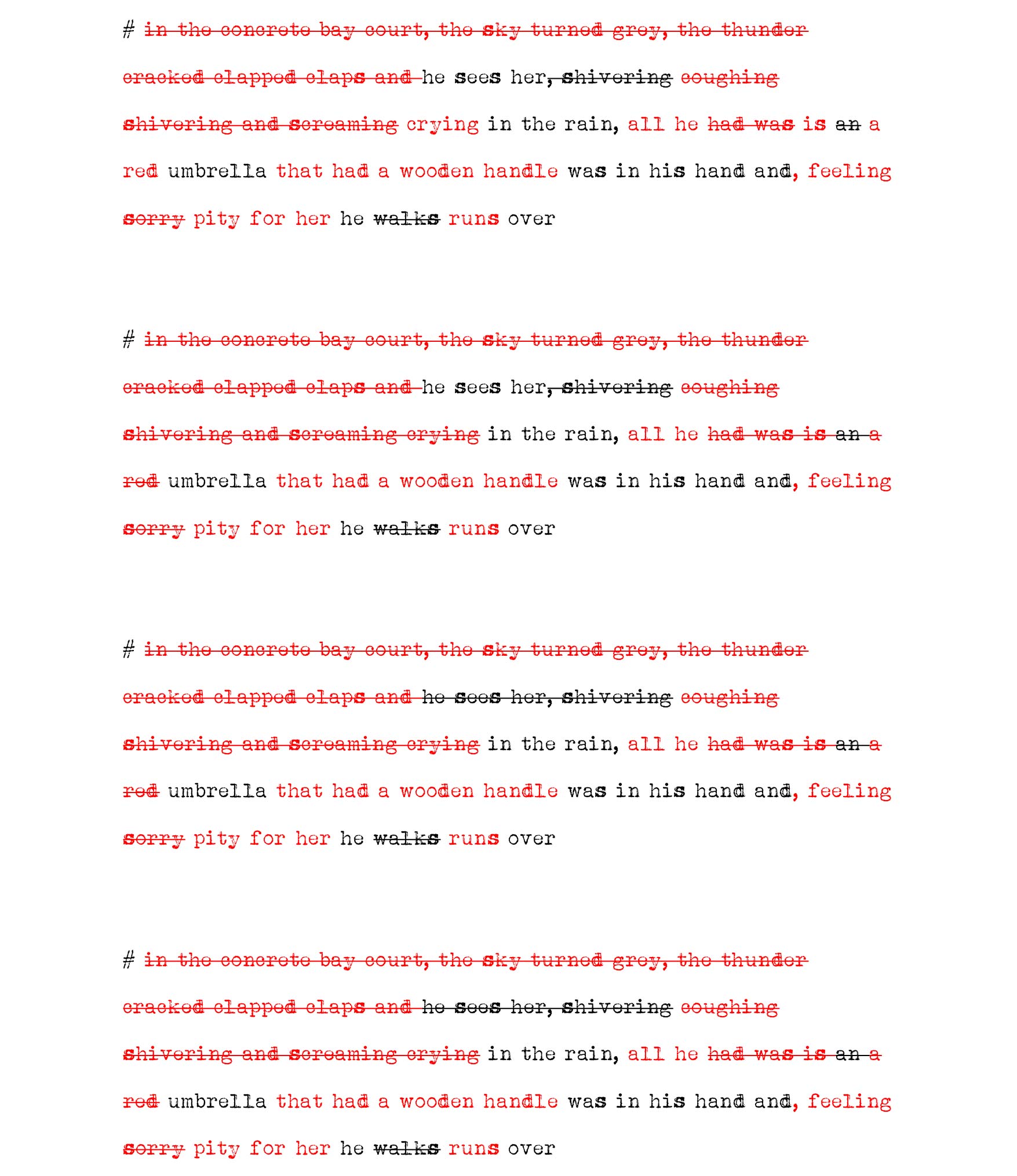
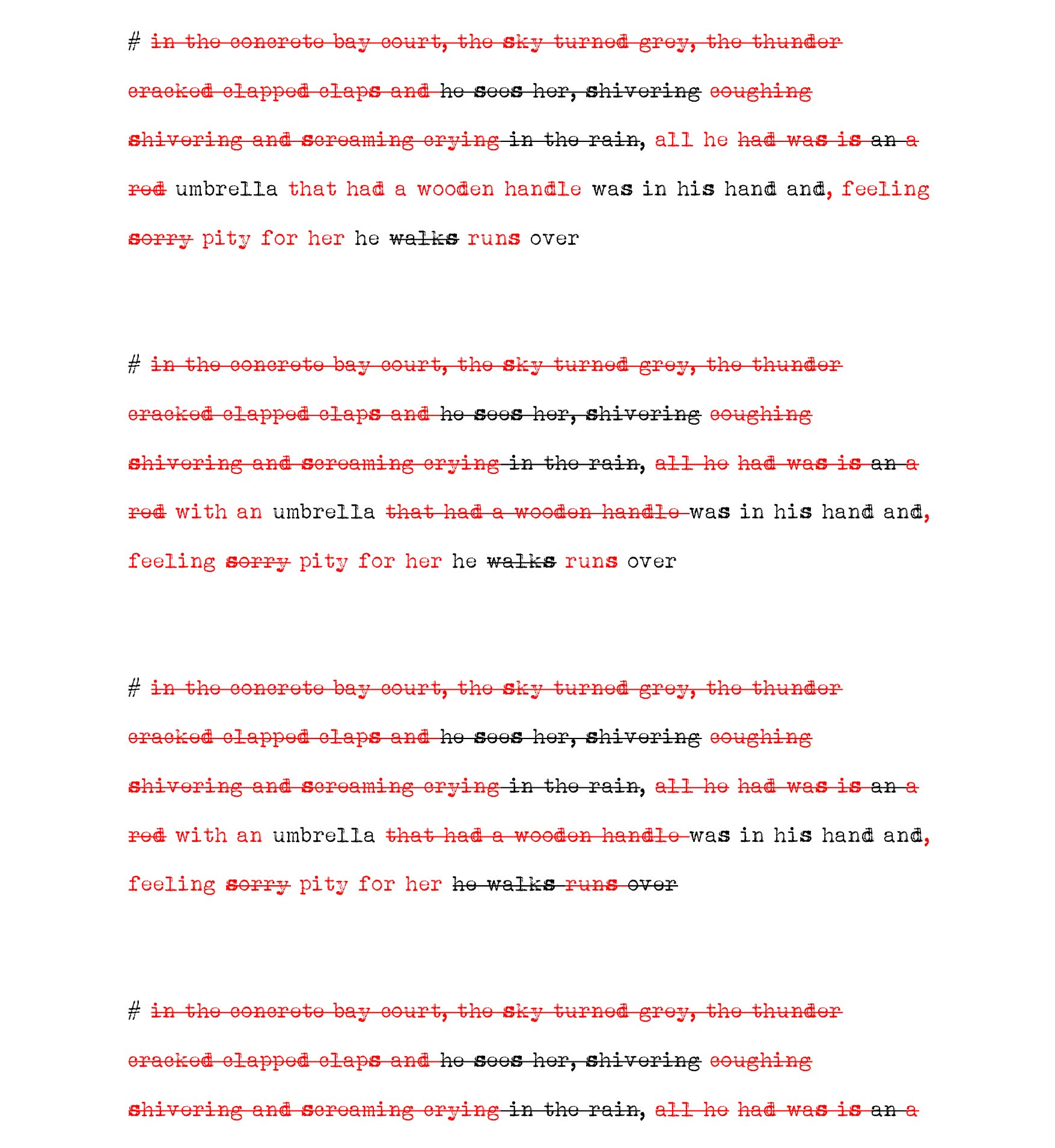
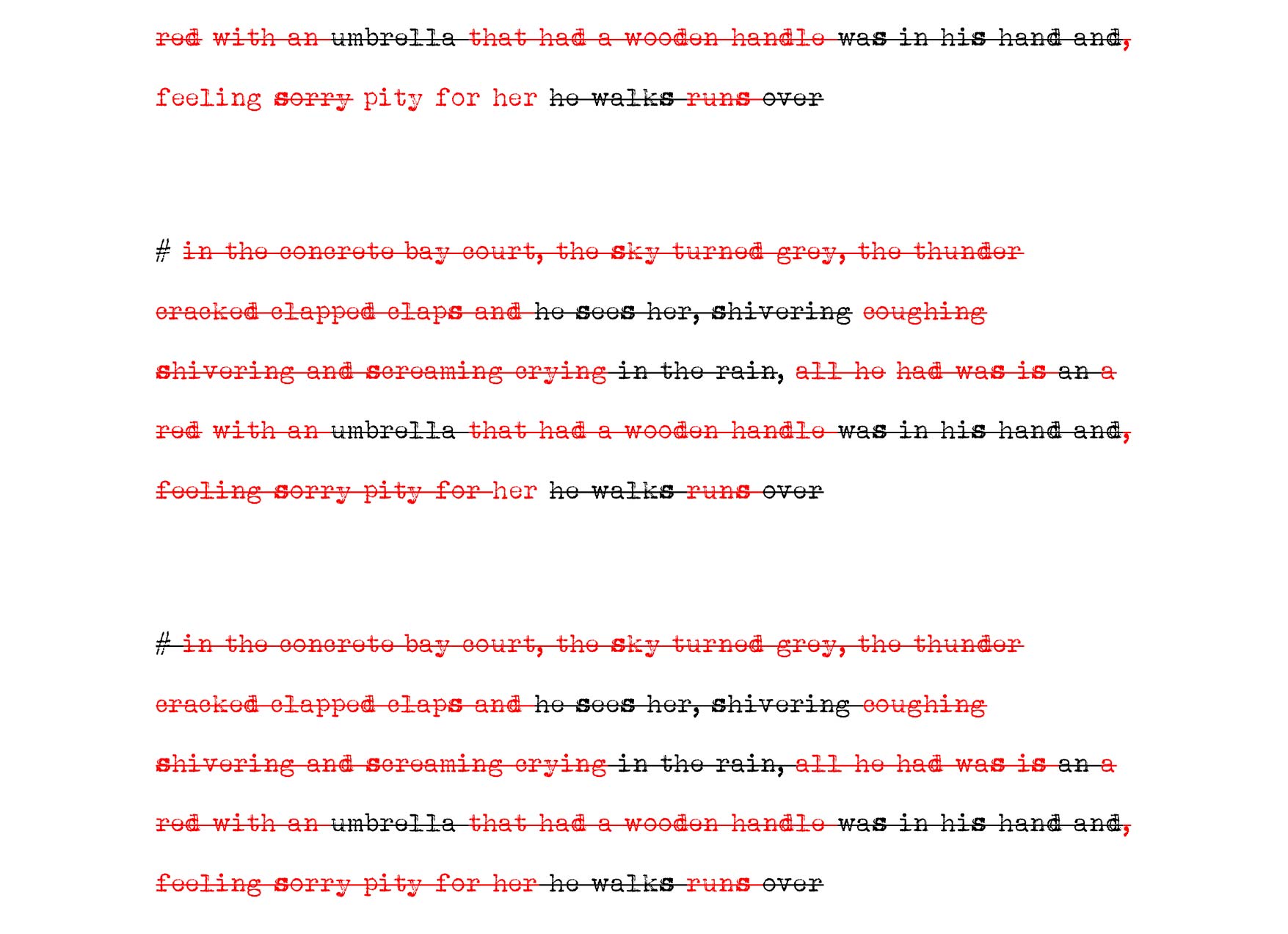
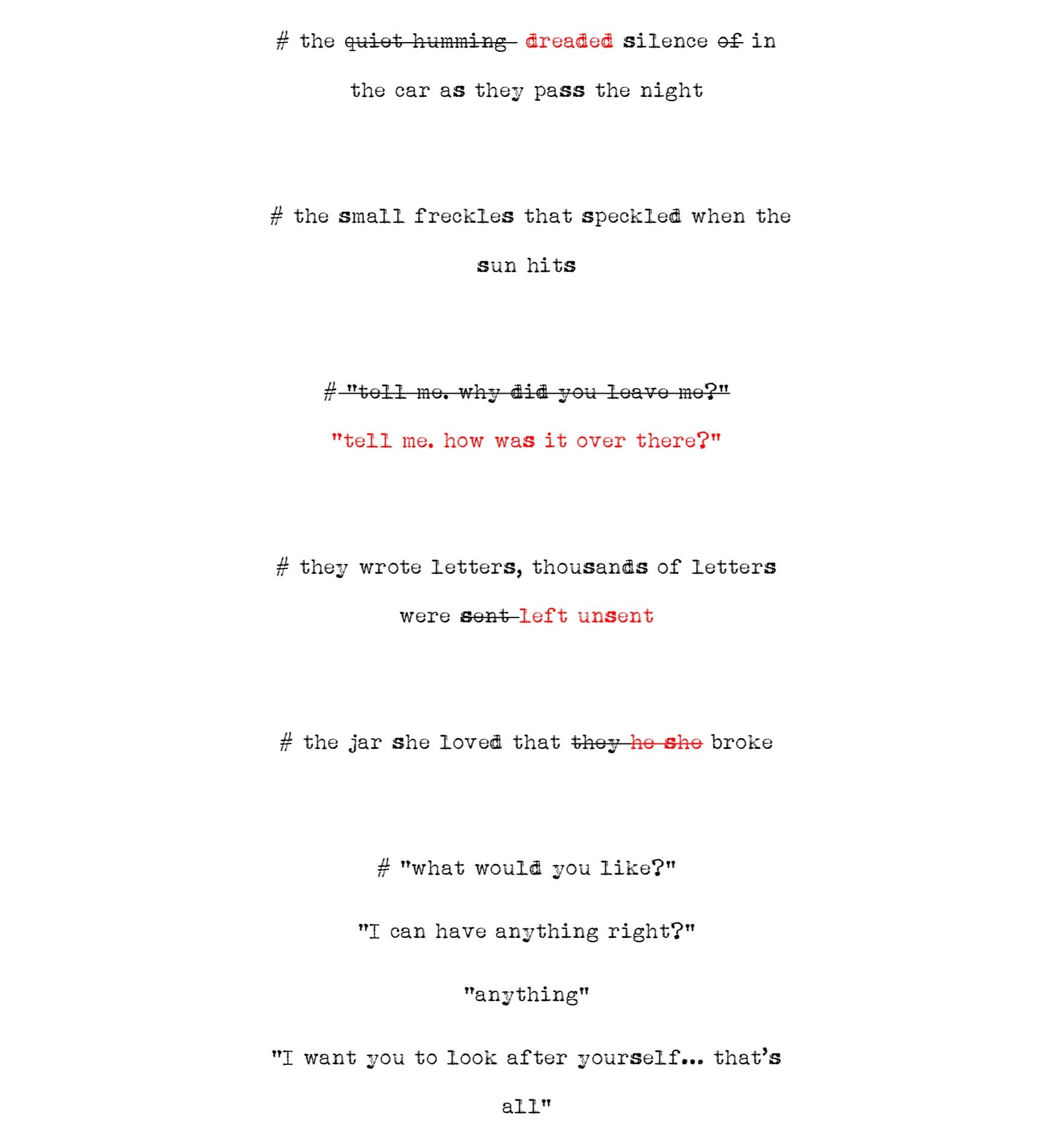
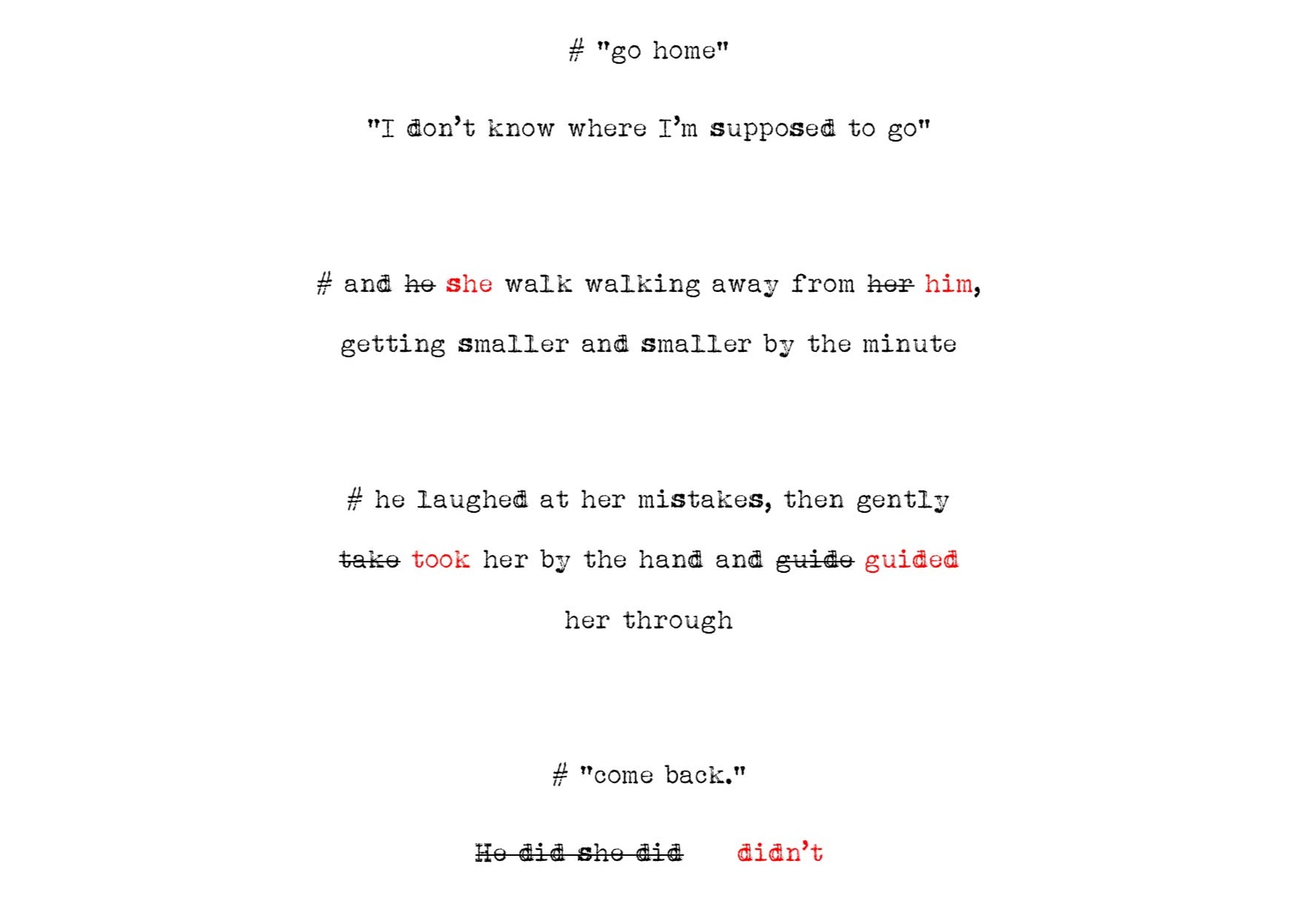
The series of sentences were inspired by Sue Zhao’s writing. During one of the lowest points in my studies, I would be reading her short stories which eventually pushed me to write my own. Below are the sentences that document a relationship between two former lovers. Each memory is being written and edited as breakups often make one question their reality of the relationship.
There are a total of three variations of the prologue. All contain a similar ideology: we are always editing and reformatting what we consider to be the truth. This second prologue is a further edit of the original.
This time it is only one memory that has been reshuffled multiple times.
You can find some of my other written words in a similar series “A Mind of His / Her Own” here.
Also in this series:
| Prologue I | Prologue II | Signs I | Signs II |
The Heartbroken Architect I : Prologue I (2016-2017)
| Prologue I | Prologue II | Signs I | Signs II |
This project began in the third year of architecture when we had to create three items to demonstrate a selected concept. Focusing on Ray and Charles Eames’s ‘Power of 10’, I focused on the expression of ‘infinity’ and the disparity of a person’s memory.
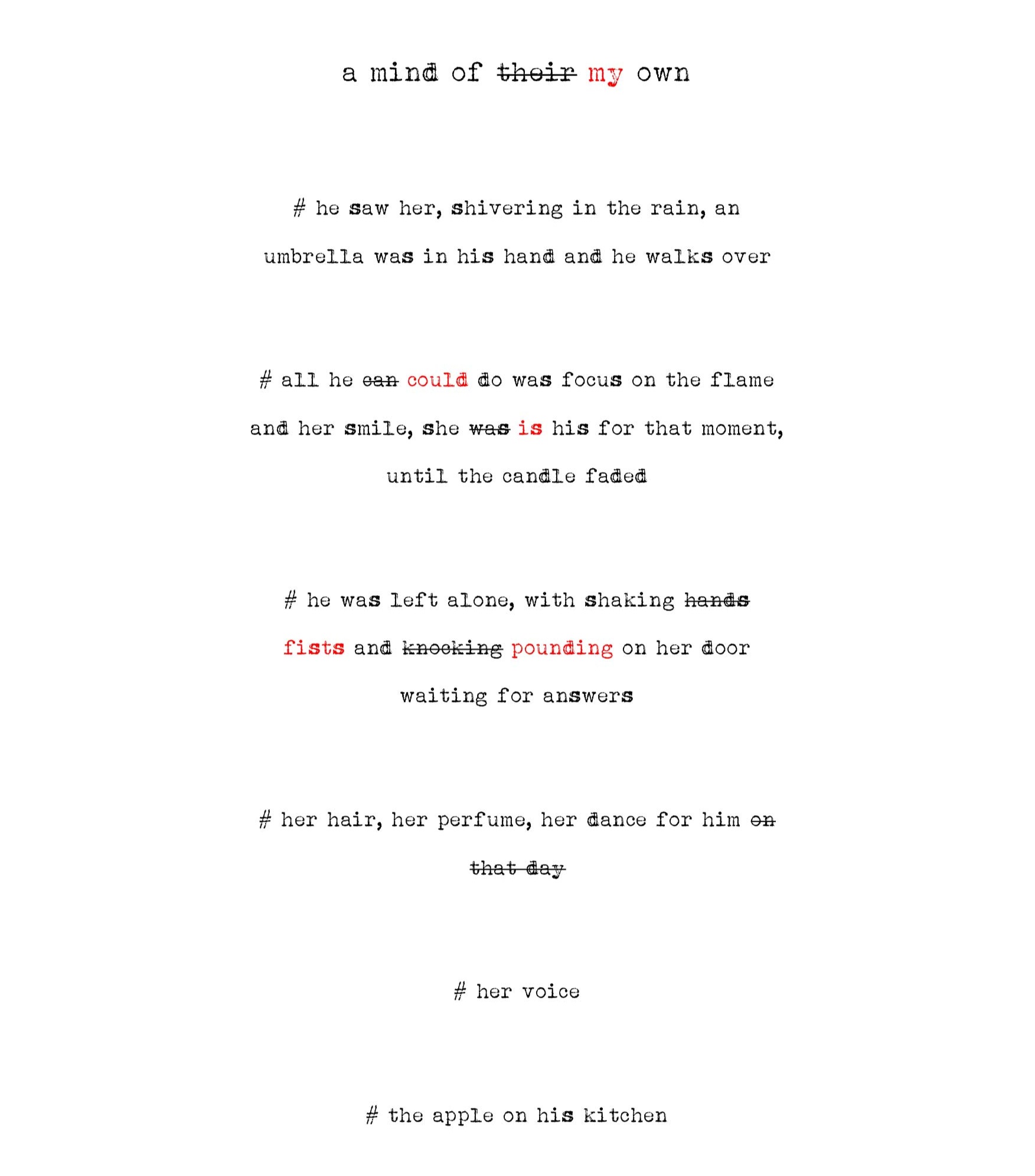
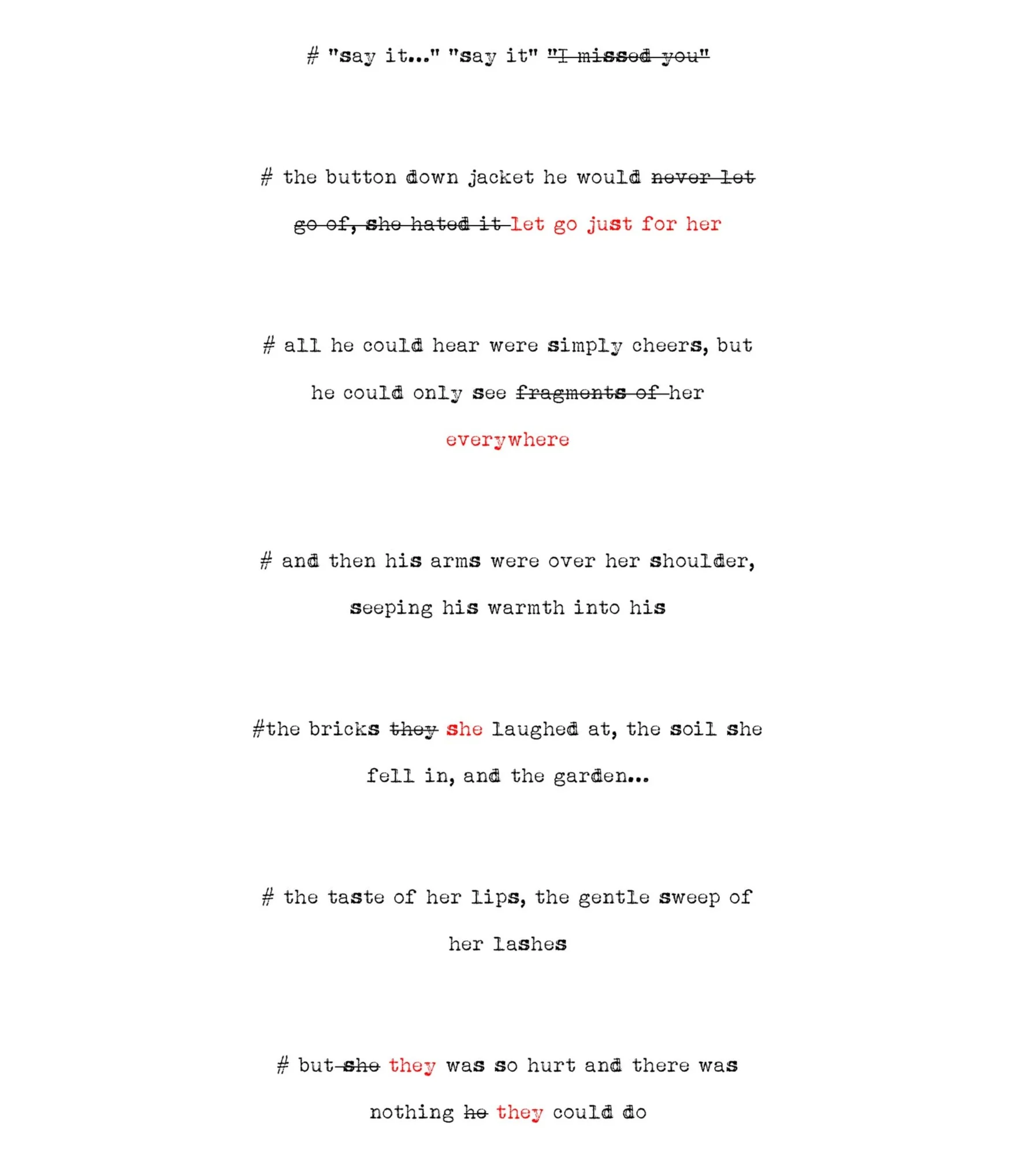
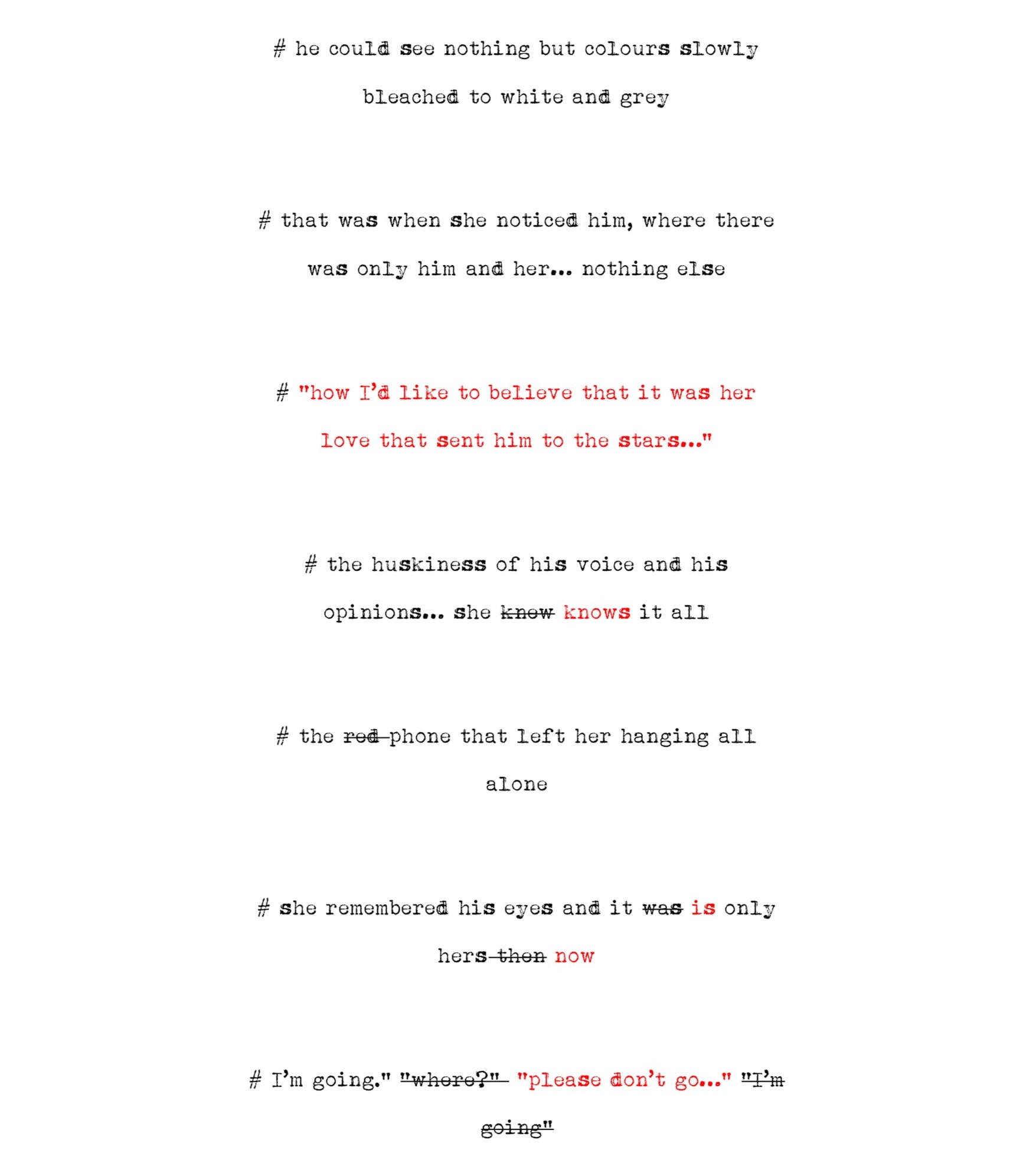
The series of sentences were inspired by Sue Zhao’s writing. During one of the lowest points in my studies, I would be reading her short stories which eventually pushed me to write my own. Below are the sentences that document a relationship between two former lovers. Each memory is being written and edited as breakups often make one question their reality of the relationship.
There are a total of three variations of the prologue (below is the original). All contain a similar ideology: we are always editing and reformatting what we consider to be the truth.
You can find some of my other written words in a similar series “A Mind of His / Her Own” here.
Also in this Series
| Prologue I | Prologue II | Signs I | Signs II |
If We Lived on Equilibrium
This year, the Australian Institute of Architects released the EOI for the Venice Biennale. Although I wasn’t able to participate in the competition, here is my response to the brief “How do we live together?”. When society is facing a divide - equality comes to mind. But what is equality? What is equal chance?
*For full expansion of my thoughts on the Venice Biennale 2020’s prompt, you can find them here:
‘How will we live together?’: Part I, II
This year, the Australian Institute of Architects released the expression of interest for the Venice Biennale. Although I wasn’t able to participate in the competition, here is my response to the brief “How will we live together?”. When society is facing a divide - equality comes to mind. But what is equality? What is equal chance?
This poem is my response and catalyst to an eventual blog post that explores the area of the brief.
If we all lived in equilibrium
If we all lived in equilibrium, would we consider it fair?
Would everyone have a home? Would everyone have a job?
Would everyone be able respect one another?
It all has to start somewhere when we’ve reached equilibrium – it would be like Animal Farm again,
Saying that we’re all living as equals, until someone wants more.
If we all lived with respect and empathy, then we may live in equilibrium, sure we may have issues to solve, global warming to be aware of.
But at least we will be fair, be willing to apologise
Be willing to admit mistakes to learn and grow.
But this world does not thrive on equilibrium,
Because those with wealth wants to protect it,
Looking down on others has become a habit that nobody wants to return to that.
Words of exlusivisity, denial are ever present.
If we all lived in equilibrium.
Can’t find the article?
You can find the list of past entries here.
Listen in!
You can find ‘Archemist Podcast’ here, or on Spotify and Apple Podcast!
Archemist In The Making’s stories are written and curated on Wurundjeri Land.