

Mycelium wildfire jacket by Judith Glover, Tien Huynh, Mohamad Arekha Bentangan & Alexi Freeman
Photo: Sean Fennessy
Designed in partnership with NGV’s Futures Partner RMIT University – NGV’s question on regenerative materials manifests into a commissioned exhibition Plant Life: The Nature of Design. This exhibition is an ensemble of 60 works, cumulative of mixed media explores what regenerative material is through various design lenses and principles.
Located at Ian Potter Gallery, Plant Life: The Nature of Design challenges what it means to be sustainable – an act that is not just reduced to the marketing term, but rather consider the life cycles of products, pre- production, during construction and demolition of the product. There is the importance of being selective in material choices for design, however, the choice of product and how it is being manufactured is one that needs to be considered greatly as well.
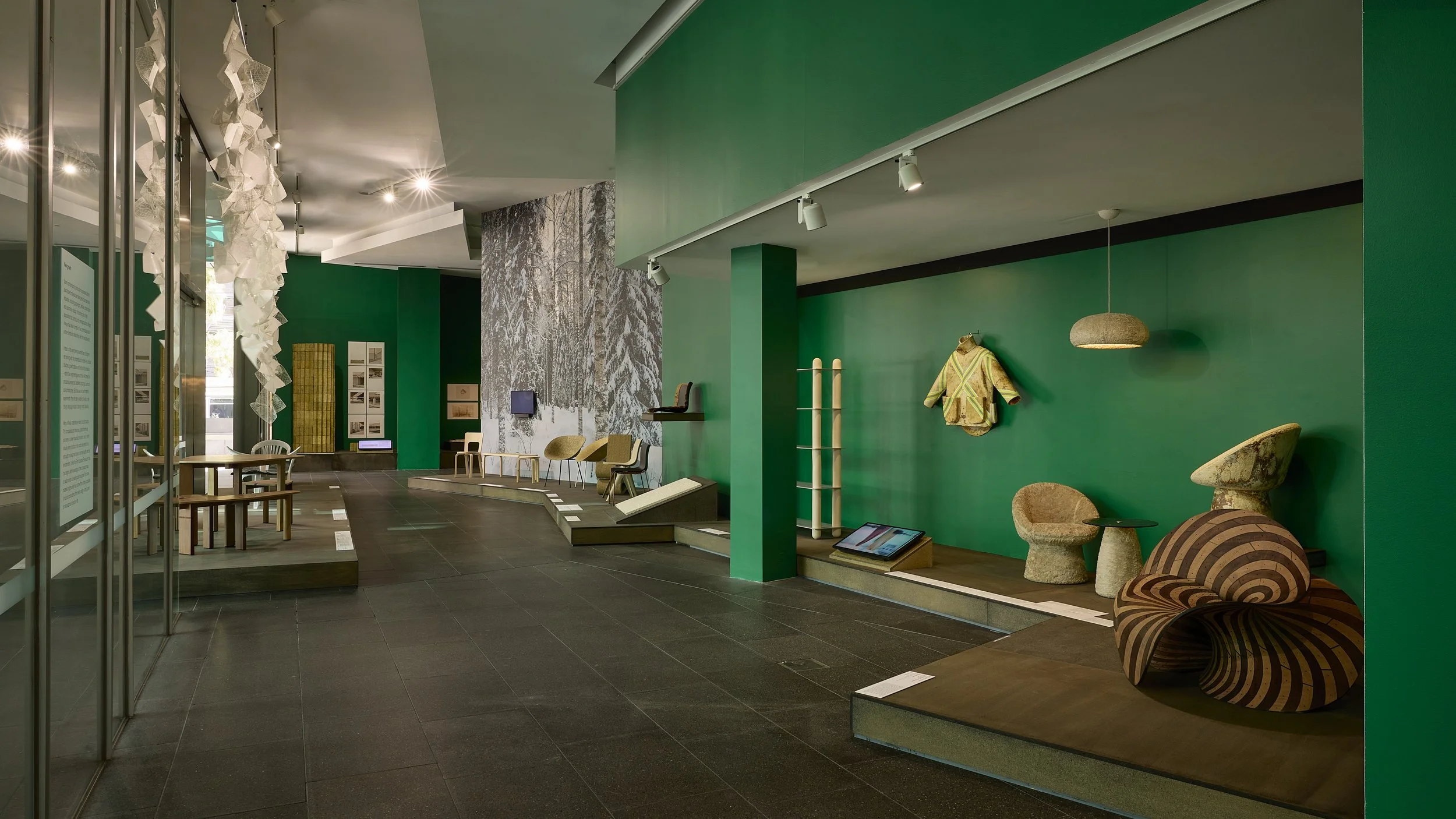
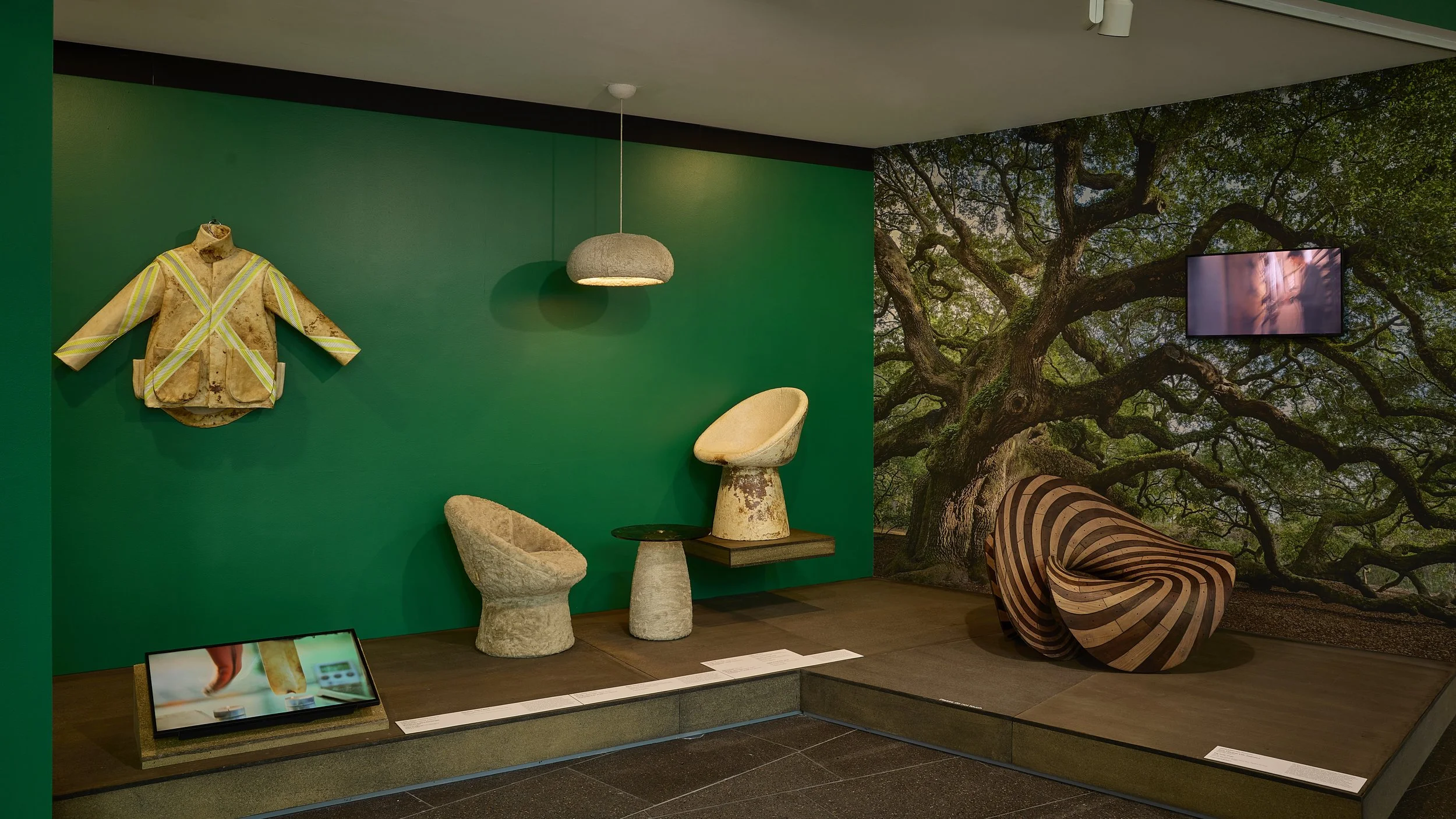
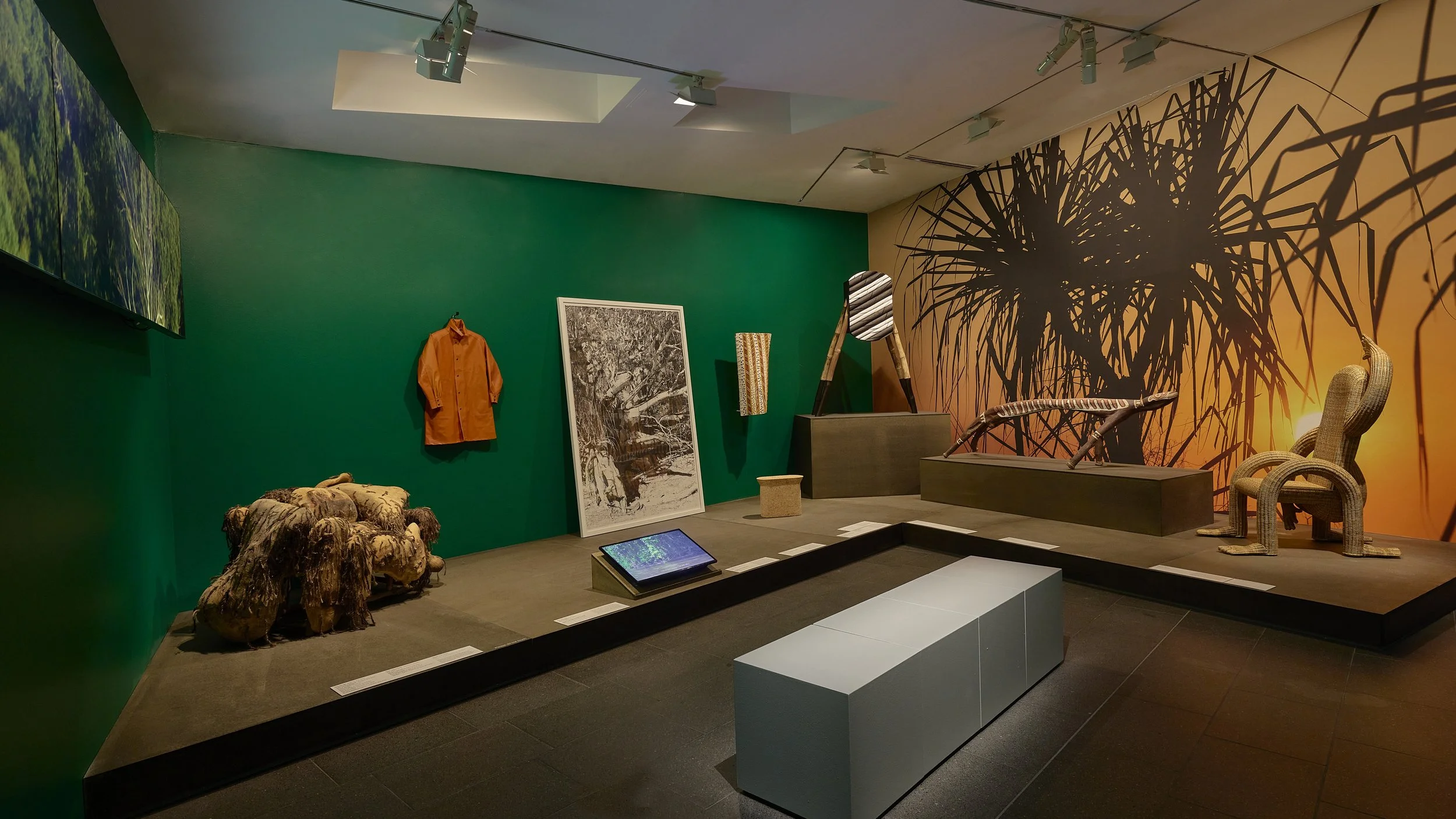
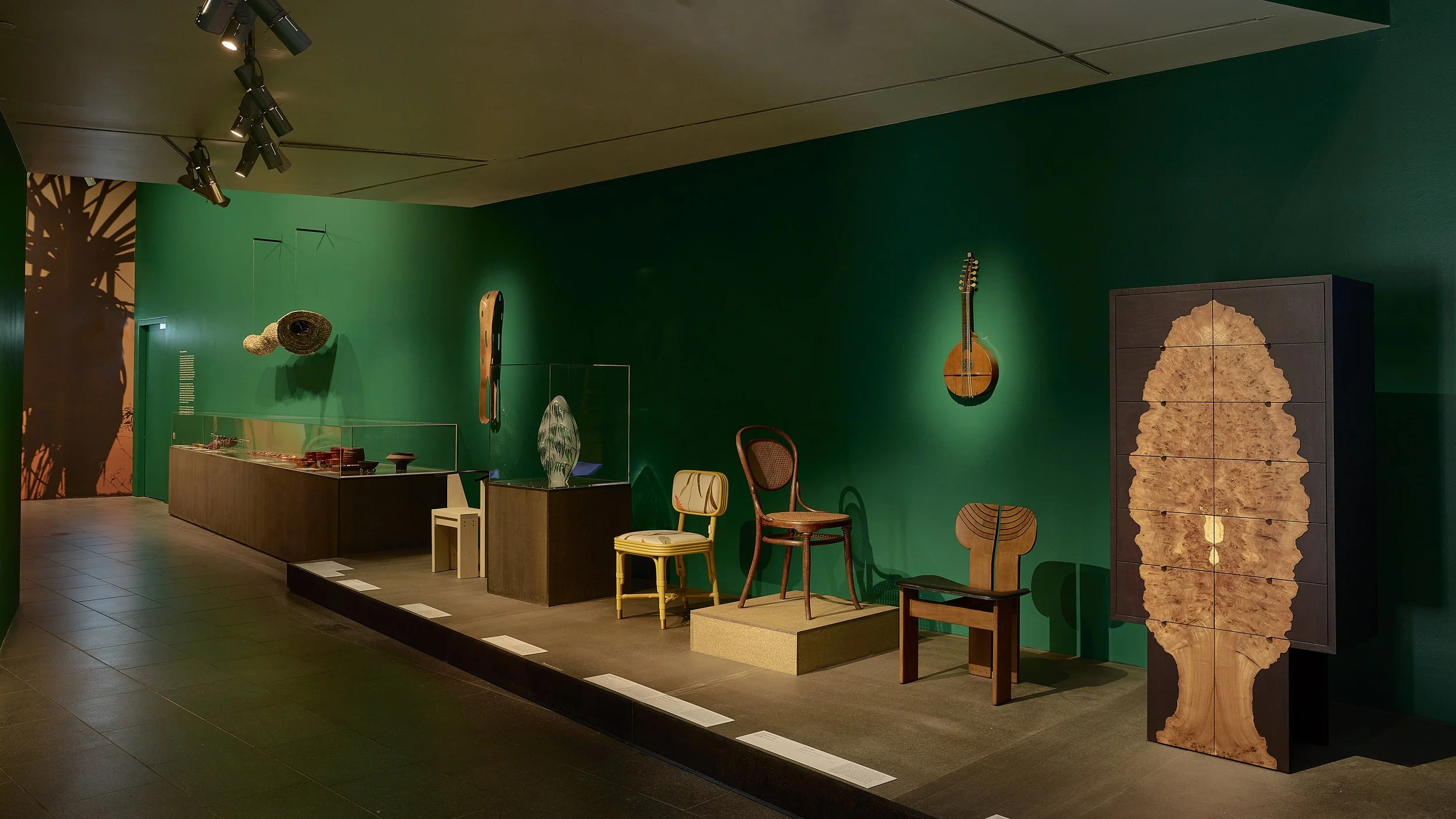
Inside the ensemble commences on a study of products designed in consideration of the life cycle of timber / fungi and plastic alternatives. The first exhibition space welcomes visitors with a sea of furniture pieces that includes a ply loop chair designed by Joris Larrman Lab, made of ply with adhesive that is made of plant-derived Plantics bio-resin in place of urea-formaldehyde resins; a collection of chairs designed by Aifunghi is made of hemp. There is also shelving that looks at plastic alternatives. At the end of the room sits several designs by architects from Edition Office (in collaboration with Kate Scardifield), EAST Architecture Studio and fabricator Remarkable FZE.
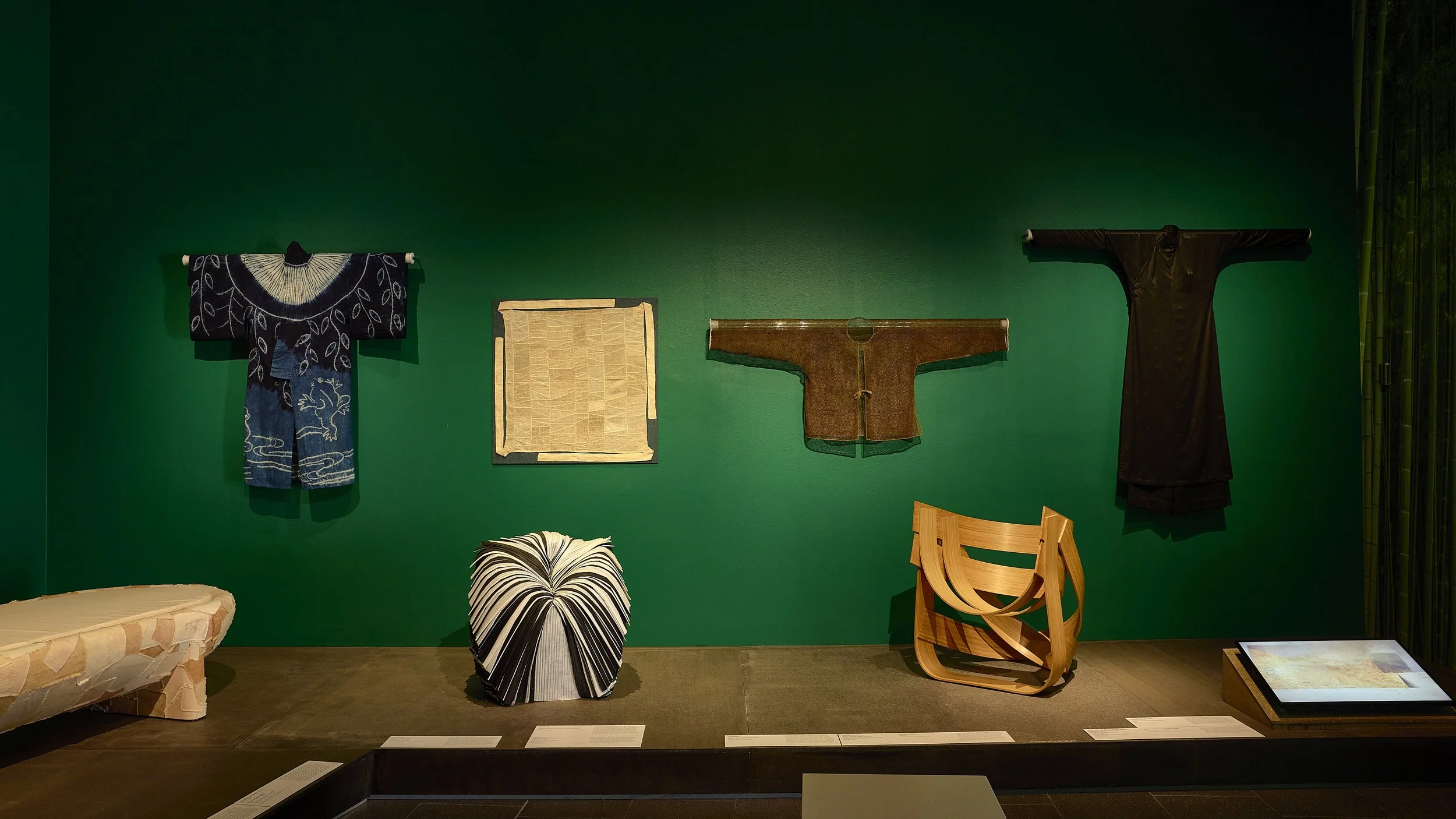
Among the furniture pieces hangs a wildfire jacket designed by the team Industrial designer Judith Glover, material scientist Tien Huynh, microbiologist Mohamad Arekha Bentangan and bio-designer Alexi Freeman. The jacket, made of mycelium leather, has impressive qualities that is naturally flame resistant, and signposts as a future alternative for active fire measures.
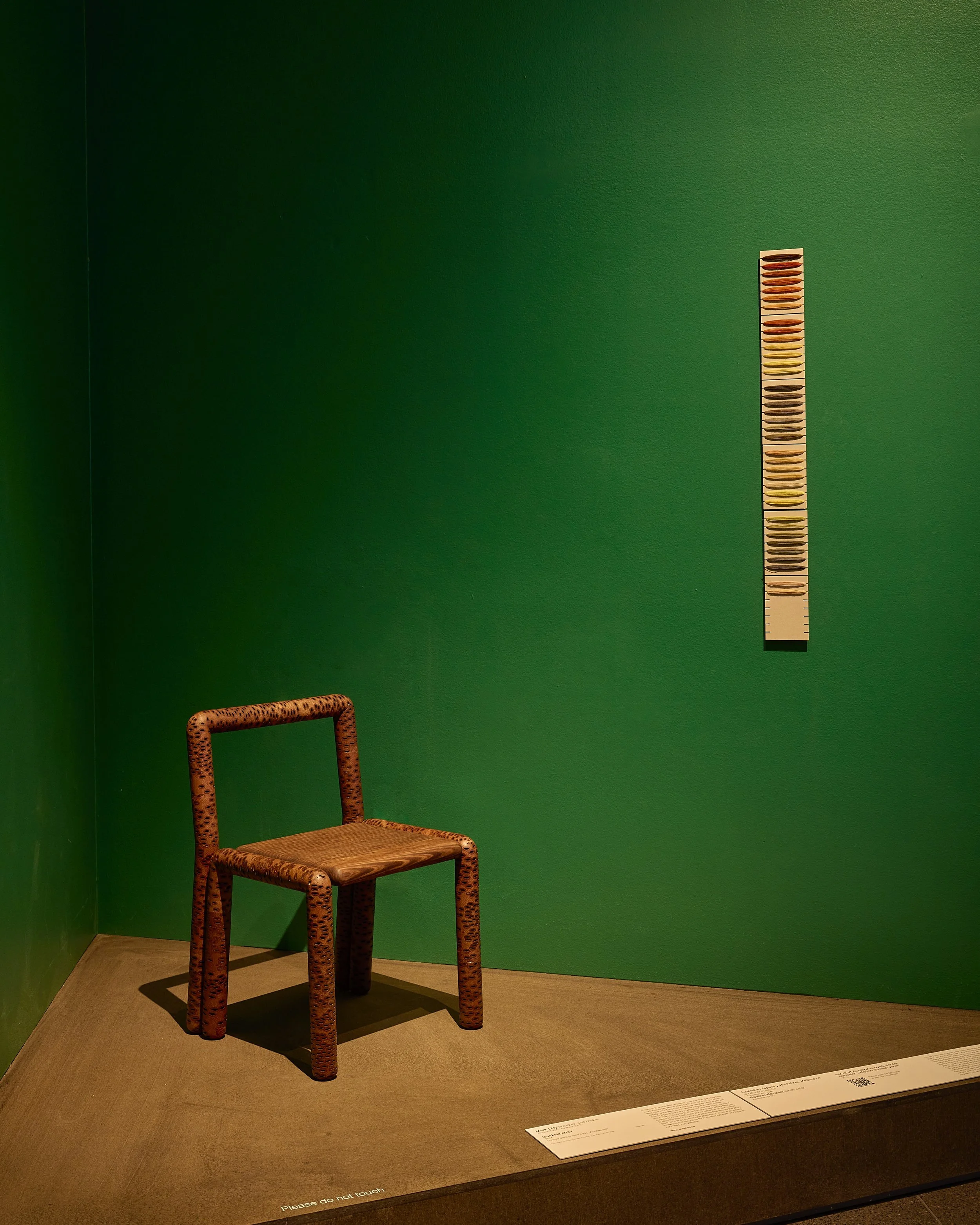
Besides the solid furniture pieces seen, tucked away within the gallery space reveals traditional techniques used in textiles. Fashion house Lo Silk’s Ao Dai proudly displays its silk, traditionally dyed in a brilliant black with plant-based materials; a chair made of banksia seed pods invites the visitors to marvel at the potential of materials that are easily treated as waste and overlooked. A video about the Mexico’s avocado trade also brings to light on the consequences of aggressive agriculture, and it had me curious about our city’s own consumption of avocado as well.
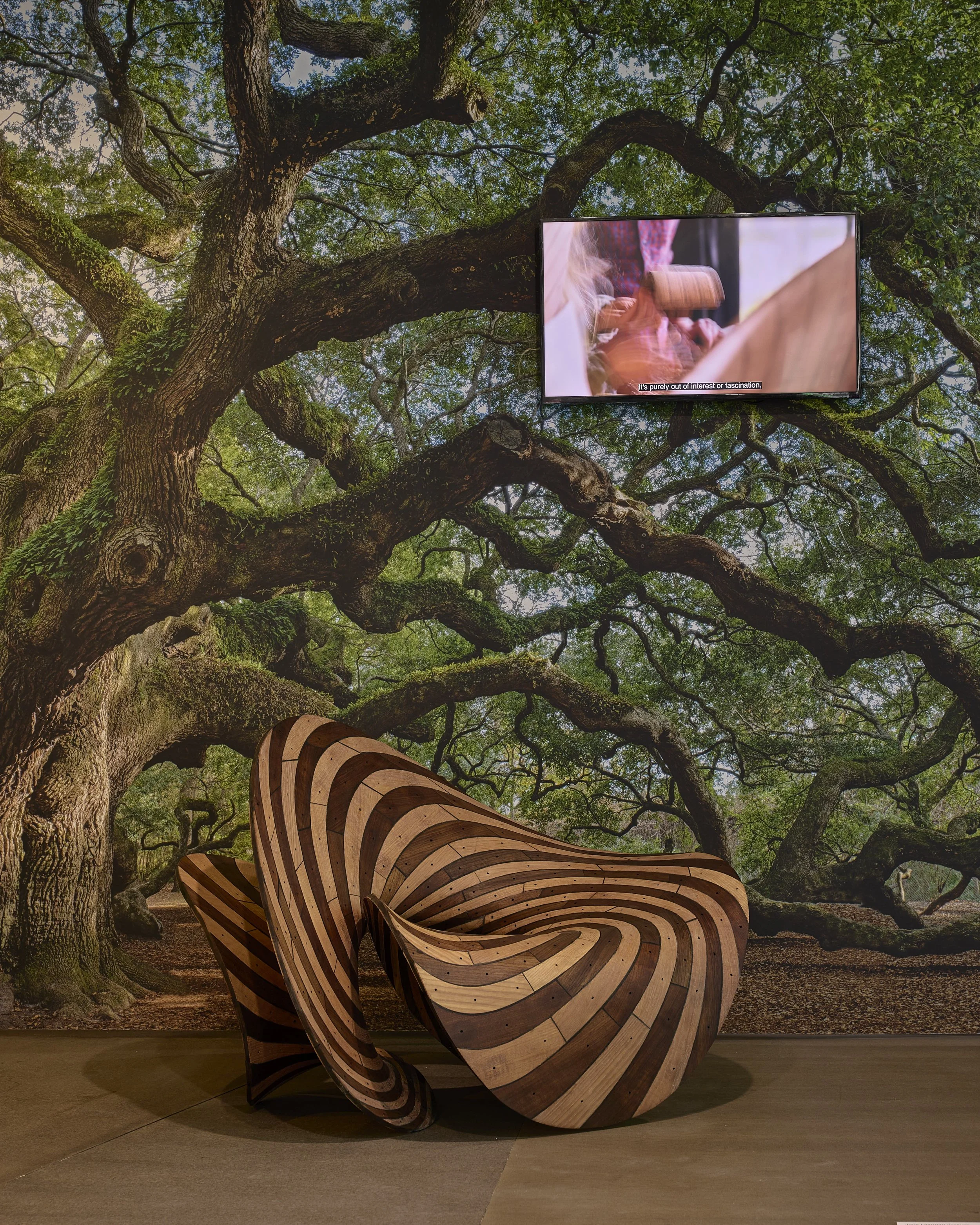
Towards the end of the collection of design pieces, Emma Hakansson’s documentary on Peruvian Amazon’s Awajun People’s traditional method of creating leather from plants captivated me the most. Following the narrative of the people collecting the sap from the rubber trees in a respectful manner (taking only what is required), creating dyes from the fruits of selected tree and carefully dying the fabric had in wonder. Against the video was Mozhdeh Matin’s rubber plant leather jacket in a brilliant orange. Video commentaries on the respect traditional methods have in working with the environment while creating something beautiful proved a wonderful message on challenging what sustainability means in the field of design.
And it’s not just the process itself that are proofs in advocacy for the need to slow down when it comes to production and manufacturing, it’s also appreciating what nature can bring to us if we cooperate with them.
Press information and images are provided by NGV Media Team; all images of Plant Life: The Nature of Design are taken by Sean Fennessy